Test whether Chinese queries can retrieve English evidence
Multilingual embeddings need cross-language retrieval checks. Separate query language from source language, preserve model-specific prefixes, and inspect source IDs before answers.
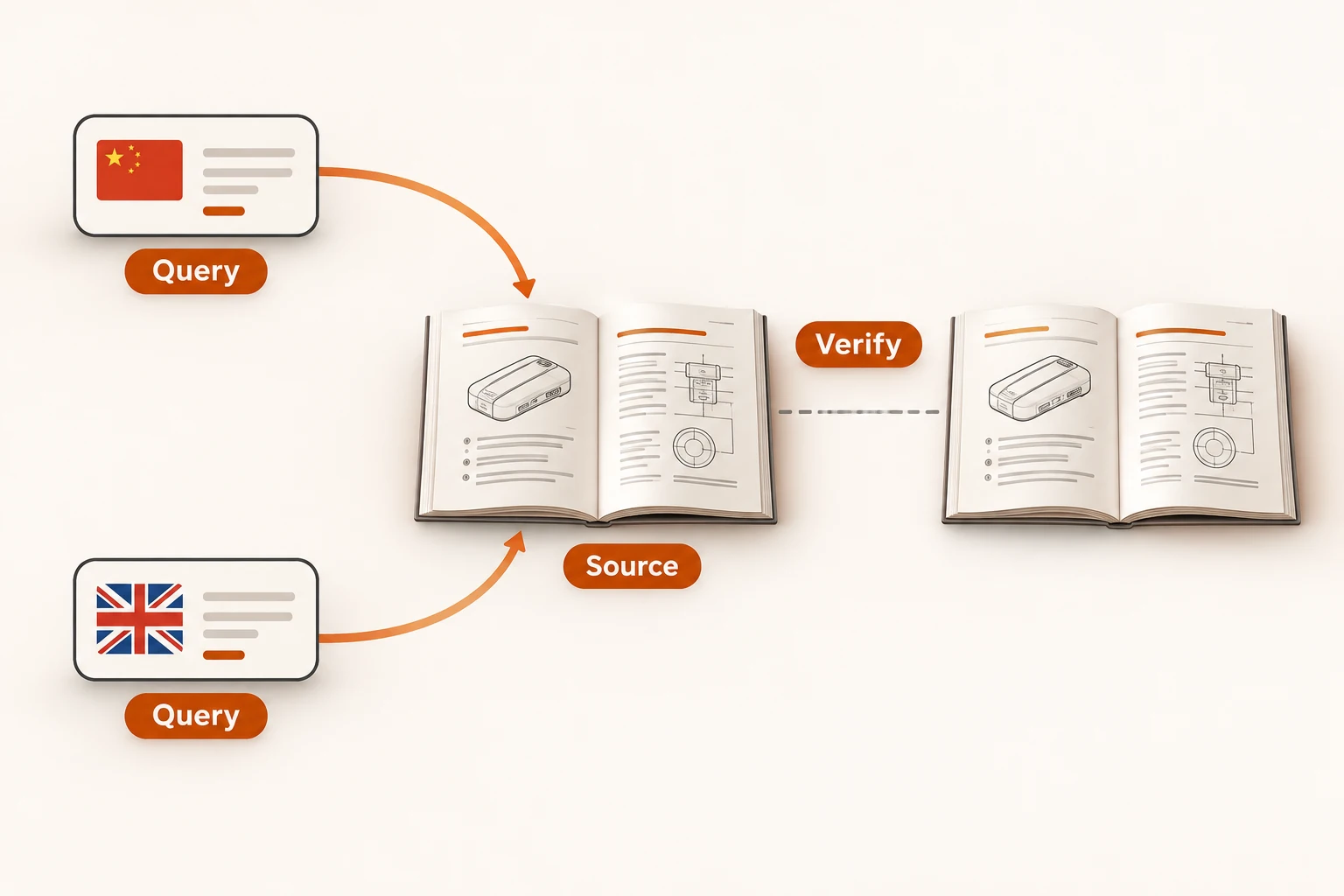
A Chinese answer does not prove that a Chinese query retrieved evidence from an English document. For multilingual embeddings, check whether the correct source passage reaches the candidate set across languages. Establish that path before adding query translation.
This article reads the multilingual-e5-large model card and Qwen3-Embedding-0.6B model card on November 26, 2026. They provide documented input conventions, not evidence of a new release or a ranking of models.
Does multilingual support guarantee cross-language retrieval?
No model label guarantees retrieval on a particular corpus. Language coverage, specialist terminology, chunking, and input preparation all affect candidates. Good retrieval within one language does not establish the cross-language result.
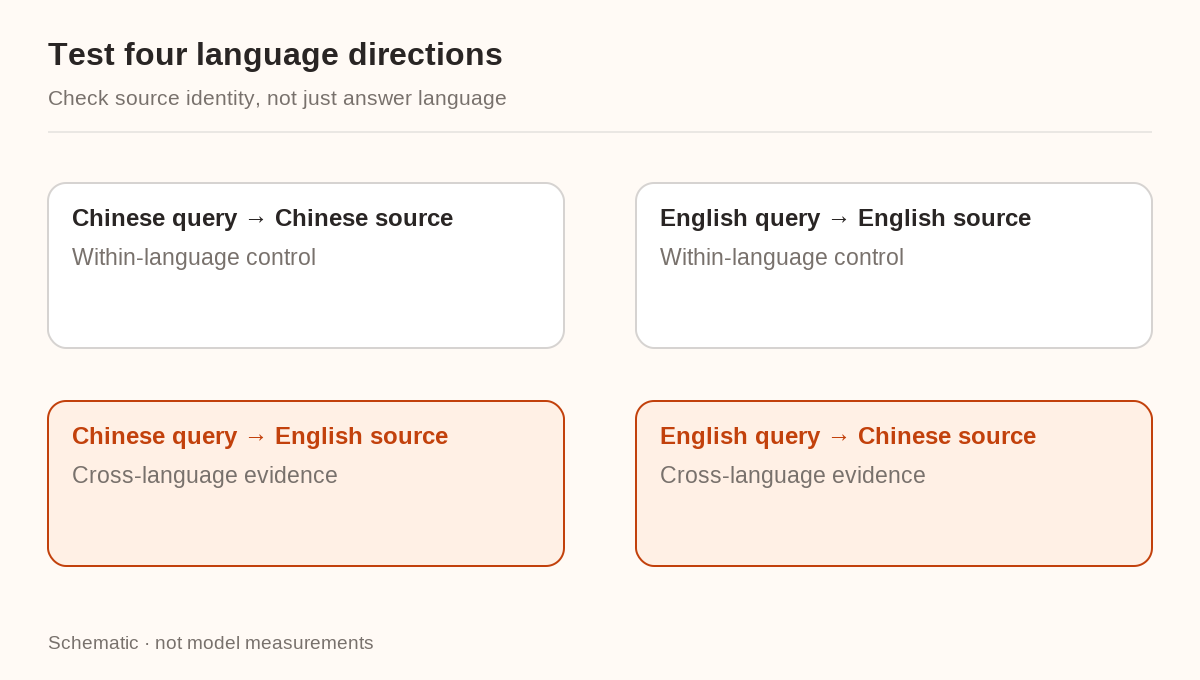
Check four directions separately: Chinese to Chinese, English to English, Chinese to English, and English to Chinese. Otherwise, the answer model may translate its own general knowledge into the requested language while the knowledge base contributes no supporting evidence.
Use public demonstration text before testing any corpus that contains customer information or restricted documents.
Should role prefixes be translated too?
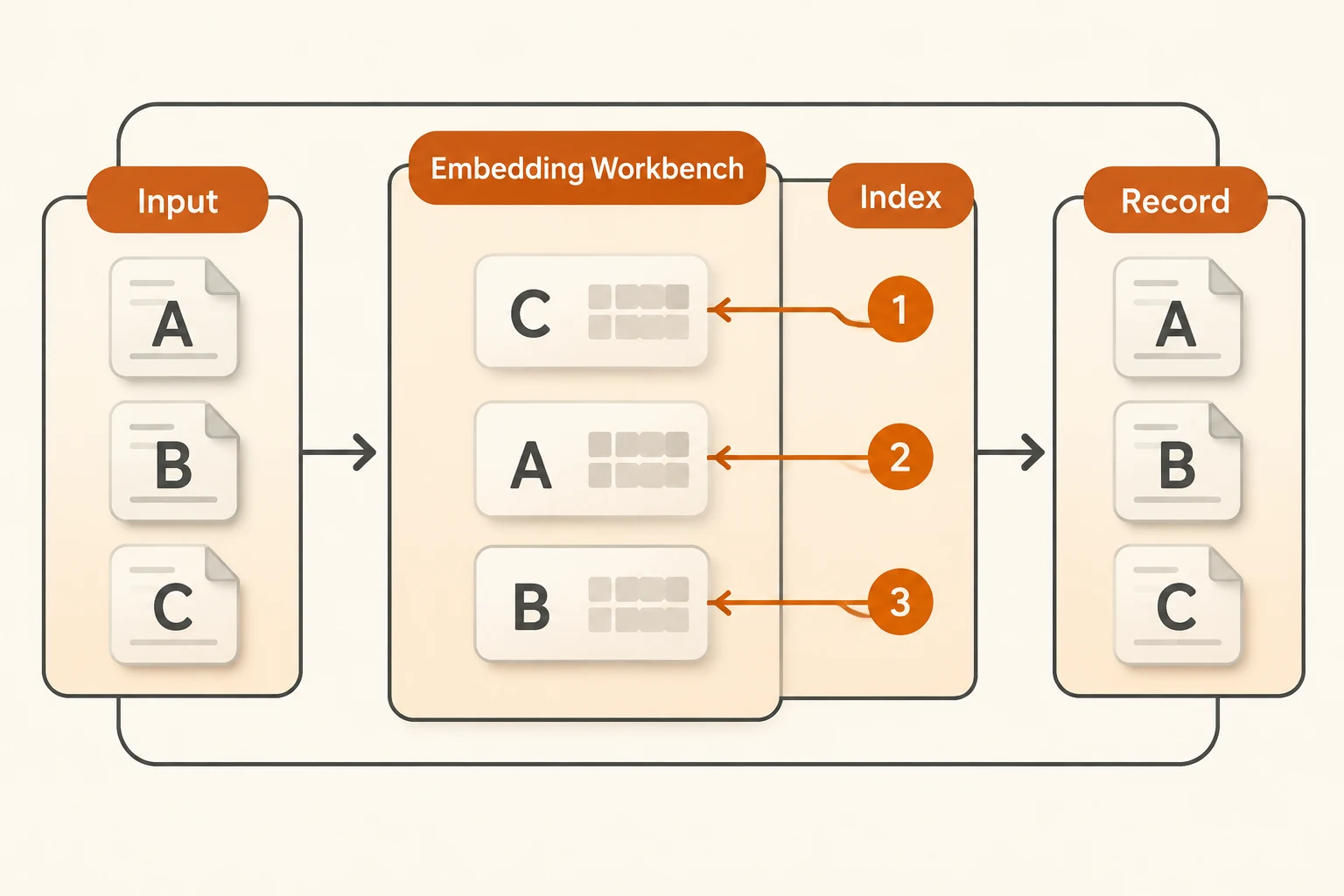
For multilingual-e5-large, keep the specified query: and passage: prefixes, including for non-English content. They identify input roles; the text after them can remain Chinese.
query: AX-17 的输入电压是多少?
passage: Public demo manual: AX-17 accepts a 12 V DC input.
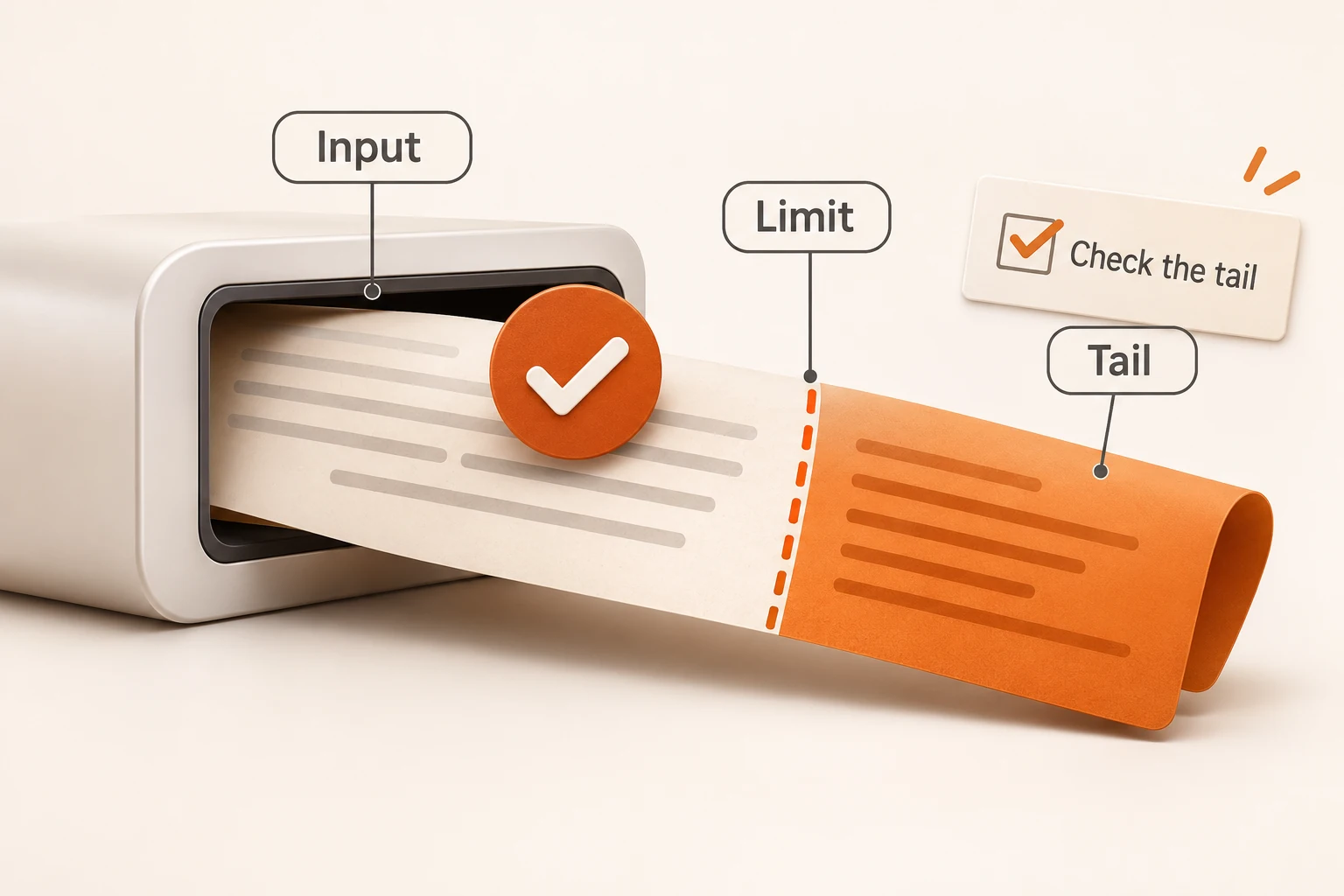
These are illustrative input strings, not a measured match. The E5 card also states that long input is truncated to at most 512 tokens. Use the input-completeness checks so the evidence is not lost before retrieval.
Qwen3 uses a different convention. Its current card recommends a task instruction for queries; the Sentence Transformers example uses prompt_name="query" for queries and encodes documents directly. Its custom instruction format includes Instruct: and Query:. Recommending English task instructions in multilingual settings does not mean every Chinese question must first be translated into English.
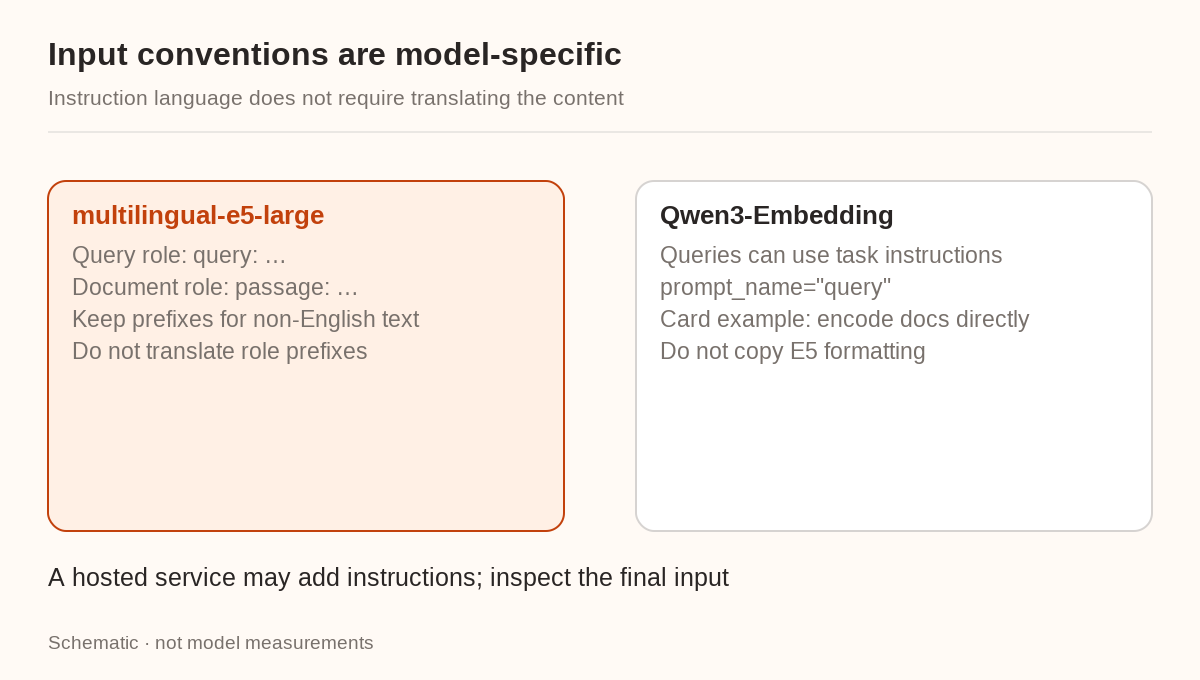
For a hosted service, determine whether it already adds the expected prefix. Applying it in both the SDK and service changes the final input. Gemini's separate convention is covered in the query and document formatting guide.
What public test corpus would make failures visible?
Use a few unambiguous sources and one similar distractor. These are invented teaching specifications, not real product ratings:
| Source ID | Text |
|---|---|
manual-en | AX-17 accepts a 12 V DC input. |
manual-zh | BQ-20 的防护等级是 IP54。 |
near-id | AX-71 accepts a 24 V DC input. |
Then define expected evidence before running retrieval:
| Case | Query | Required source |
|---|---|---|
zh-en | AX-17 的输入电压是多少? | manual-en |
en-en | What DC input does AX-17 accept? | manual-en |
en-zh | What is the ingress protection rating of BQ-20? | manual-zh |
zh-zh | BQ-20 是什么防护等级? | manual-zh |
paraphrase | What supply voltage is specified for AX-17? | manual-en |
near-model | AX-71 的输入电压是多少? | near-id |
Add a question about AX-17's warranty, which no source answers. Assess whether evidence supports an answer; do not require nearest-neighbor retrieval to return an empty list. It may still return the closest document.
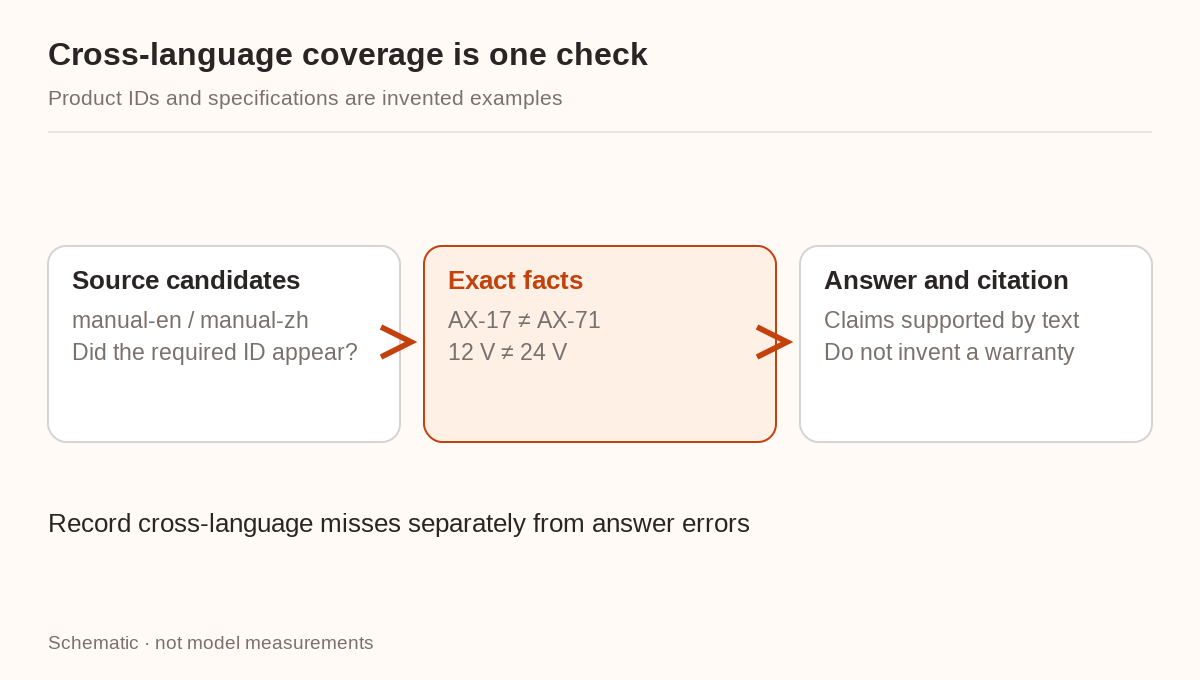
After checking cross-language coverage, inspect exact identifiers and units. AX-17 and AX-71 are related strings but different products. The hybrid retrieval guide develops that identity check further.
How do you record missing evidence?
Keep raw candidate IDs for each question before looking at answer fluency. This complete Python example uses constructed candidates and deliberately misses the English-to-Chinese source:
expected = {
    "zh-en": {"manual-en"},
    "en-en": {"manual-en"},
    "en-zh": {"manual-zh"},
    "zh-zh": {"manual-zh"},
    "paraphrase": {"manual-en"},
    "near-model": {"near-id"},
}
retrieved = {
    "zh-en": ["manual-en", "near-id"],
    "en-en": ["manual-en"],
    "en-zh": ["near-id"],
    "zh-zh": ["manual-zh"],
    "paraphrase": ["manual-en"],
    "near-model": ["near-id", "manual-en"],
}
if expected.keys() != retrieved.keys():
    raise ValueError("Missing or unexpected query IDs")
missed = [case_id for case_id, sources in expected.items()
          if not sources <= set(retrieved[case_id])]
print("missing evidence:", missed)
The local result is missing evidence: ['en-zh']. It demonstrates the checker, not an E5 or Qwen performance result. Source coverage alone does not prove that the answer uses the right voltage, units, or conditions.
When should query translation be added?
Test translation as a separate variable after a fixed question set demonstrates a gap in direct cross-language retrieval. Preserve the original query and compare candidate IDs before and after translation. Keep identifiers, revisions, units, and negation intact.
Translation adds a processing step and may alter abbreviations or terminology. If both retrieval paths are merged, deduplicate by stable source ID while retaining access and version filters. Broader recall should not silently broaden the permitted corpus.
Use Nbility's Embeddings API for its text interface, and verify model availability and preprocessing separately. We ran the coverage checker and missing-case validation locally. We did not download model weights, call an embedding service, measure multilingual accuracy, or test automatic query translation.