A Fable 5.2 thinking-signature error can start in an earlier message
Fable 5.2 enforces thinking-prefix checks for every account. Understand how changing timestamps, tools, or saved history invalidates reasoning, and choose an append-only update or deliberate recovery.
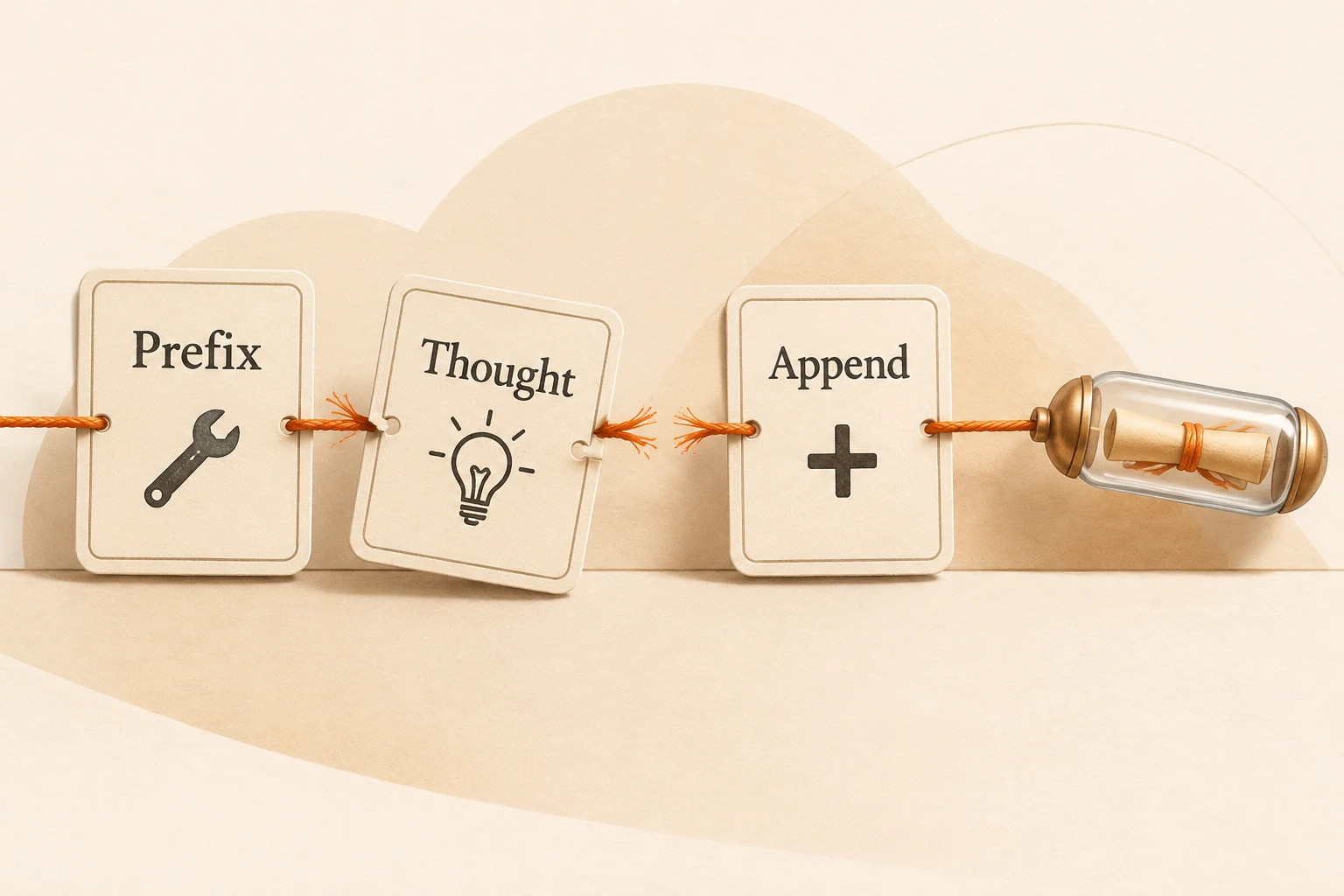
The first request after switching to Fable 5.2 works. The next returns The block is bound to a different conversation. Replacing a key or repeating the same body is unlikely to fix this error. A returned thinking block may no longer match the history that preceded its creation.
The November 9 release applies prefix enforcement to every Fable 5.2 account. Applications that rewrite system instructions, tool definitions, or old messages can invalidate reasoning they keep sending back. This is a conversation-construction problem, separate from the model-choice discussion.
Checked on November 16, 2026, this article follows the migration guide and preserved-thinking documentation. We have not submitted real signatures to reproduce the error. The suggested comparisons are offline checks. If an official product or SDK owns the history, establish its responsibility before modifying internal records.
A signature depends on what came before it
A thinking block is tied to the system, tools, and earlier messages present when it was produced. “Earlier” is relative to that block, not just the latest user turn. A changed sentence in a tool description can be enough.
| Application behavior | Why old reasoning may no longer match |
|---|---|
Refreshing a timestamp inside system each turn | Initial instructions change |
| Reloading a rule file over an old message | A past turn is rewritten |
| Removing temporarily unused tools | The tool prefix changes |
| Cutting old messages while keeping later thinking | Later blocks lose their original prefix |
| Saving only visible text | The original assistant block sequence is lost |
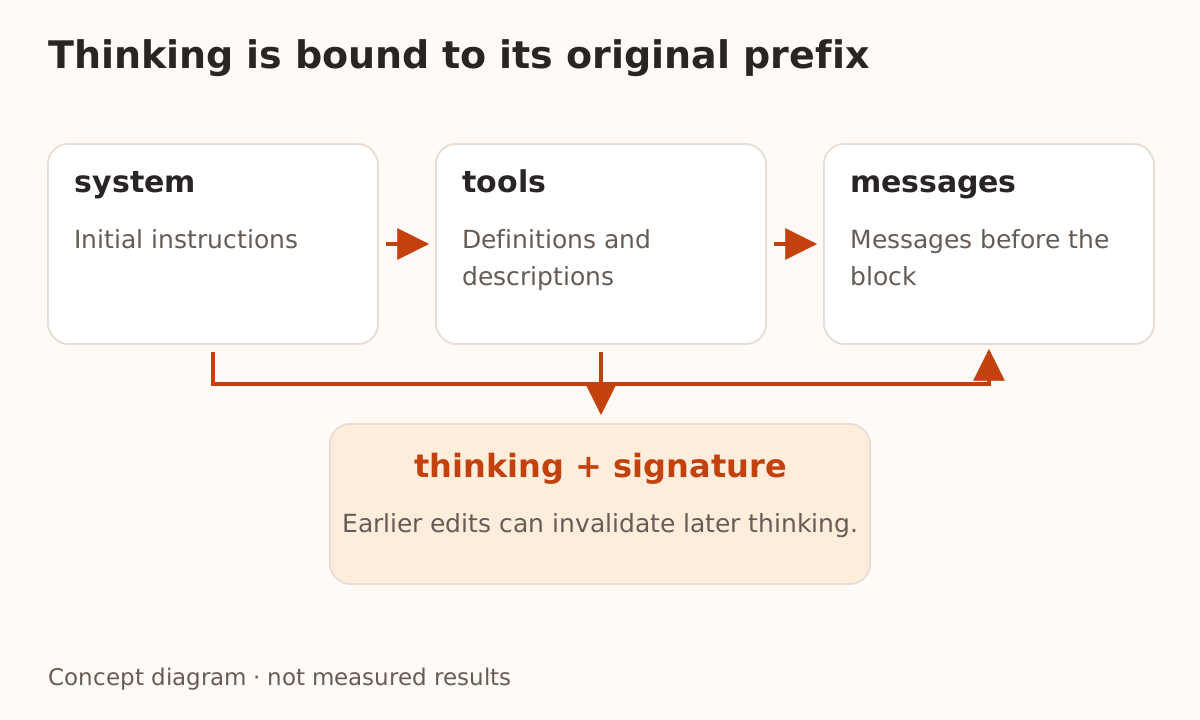
An empty thinking text field does not mean an empty block: its signature can hold encrypted reasoning. Preserve the complete assistant content in order. Custom stream parsers and serializers need to preserve these blocks too.
Append changes rather than rewriting earlier turns
When a branch, date, or working directory changes, put the new fact in a new message. This is a message fragment, not a complete request:
{
  "role": "user",
  "content": [
    {"type": "text", "text": "Environment update: the branch is now release-2."},
    {"type": "text", "text": "Run the checks for that branch."}
  ]
}
Save the message and send it unchanged later. Tool results and untrusted files have their own placement rules; preserving a signature is no reason to promote external text into operator instructions. The tool-output permissions guide explains the related trust boundary.
For genuine dynamic tool changes, the API offers appended system-message mechanisms with platform-specific blocks and beta headers. Follow the tool and instruction change documentation, rather than assuming a new field works through every compatible service. To disable tools for one request, the current guidance is to retain tools and use tool_choice: {"type": "none"}.
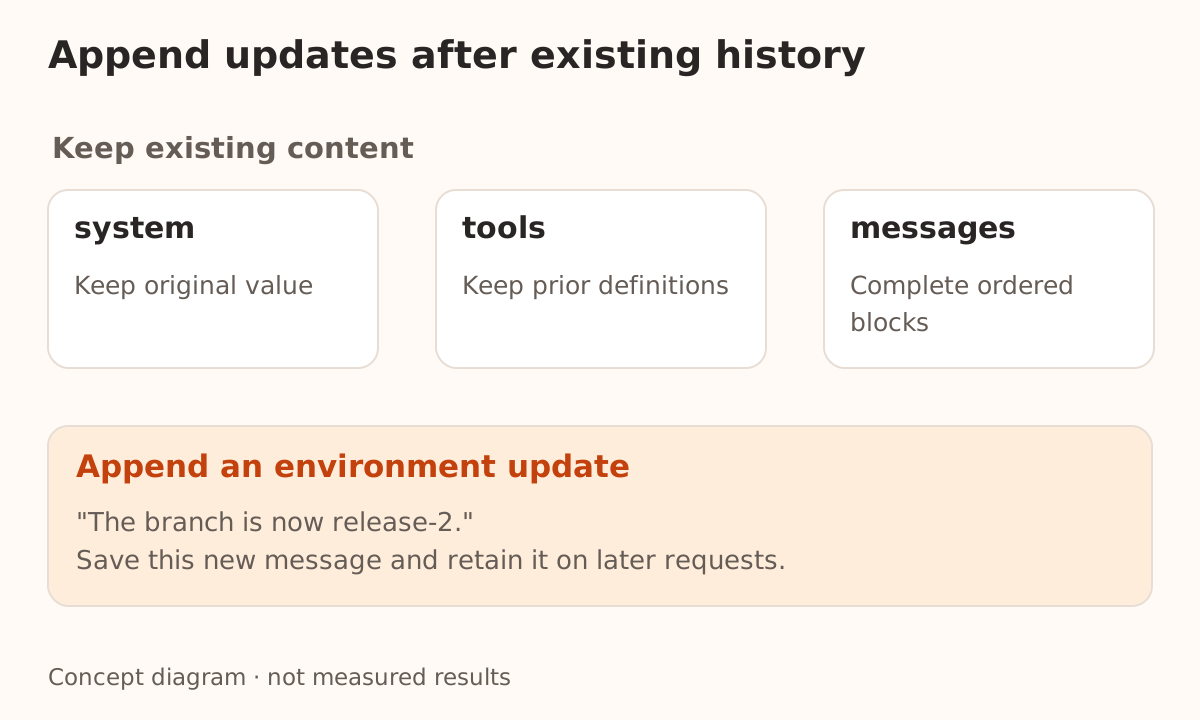
A release of your application can change the prefix too. Use new prompt versions for new conversations; keep running conversations on the version in their latest successful request. Apply necessary safety changes promptly through the documented update or recovery path. Signature continuity is not a reason to retain unsafe permissions.
Recover deliberately after a history edit
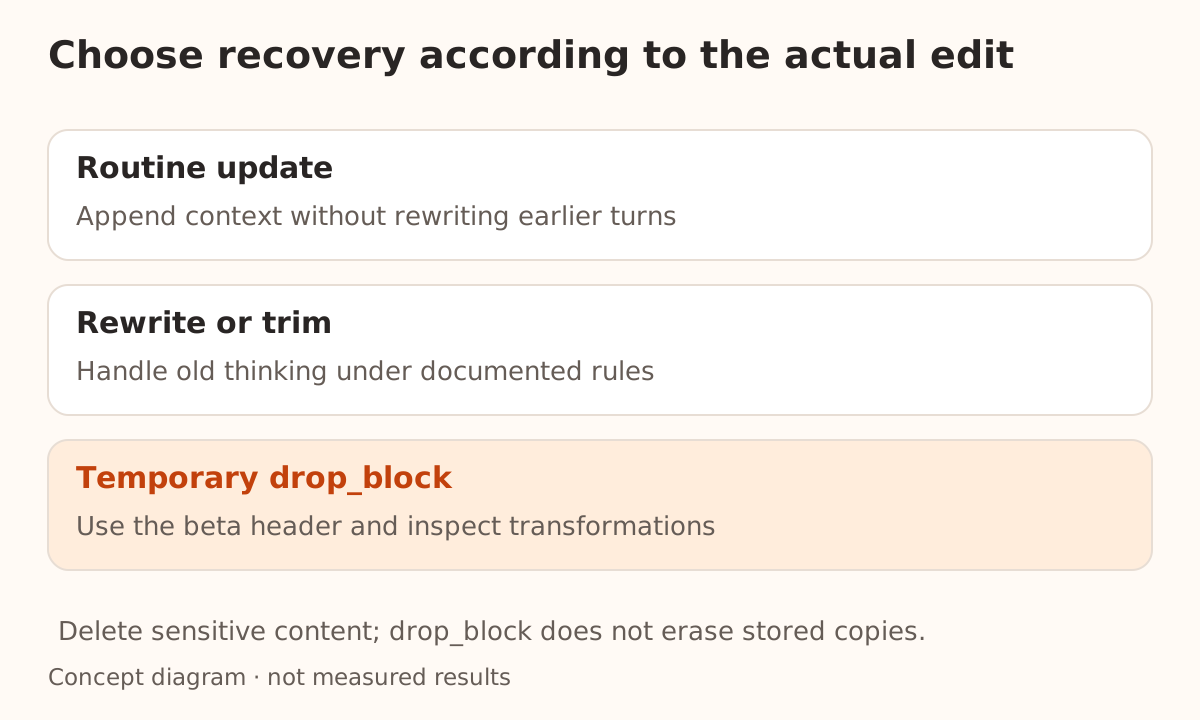
If your application must trim history, write its own summary, or change initial tools, treat thinking as bound state. Identify the earliest edit using a controlled diagnostic record before choosing recovery.
The temporary drop_block behavior lets the API discard prefix-mismatched blocks and continue. It requires the thinking-binding-controls-2026-08-01 beta header. This is only the relevant request-field fragment:
{
  "thinking": {
    "type": "adaptive",
    "block_binding": {"prefix_mismatch_behavior": "drop_block"}
  }
}
Inspect response input_transformations for prefix_binding_mismatch and fix the edits. Silent long-term dropping hides the cause. The model may need to reason again, so success does not establish equivalent behavior or cost.
Sensitive content requires a stronger cleanup. Remove the secret, personal information, or injected text and its repeated copies, then remove subsequent thinking and redacted_thinking blocks according to the official rules. Setting drop_block alone does not erase those blocks from your stored history. Preserving reasoning must not override a necessary deletion.
A model or account switch can lose reasoning without an error
Not every dropped block is a prefix mismatch. On the Claude API, Fable 5.2 can read thinking from some other models. Switching back to a model that cannot read its blocks causes the API to drop them while the request can still succeed. Fable 5.2 blocks are also bound to their producing account or a linked account; an unrelated account cannot use them.
After a routing change, examine the actual model, account path, and available transformation records as well as HTTP status. Preserve the complete history under the documented rules. A block dropped for one request should not automatically disappear from your permanent record. If you also use message threads, their fixed-field constraints apply separately.
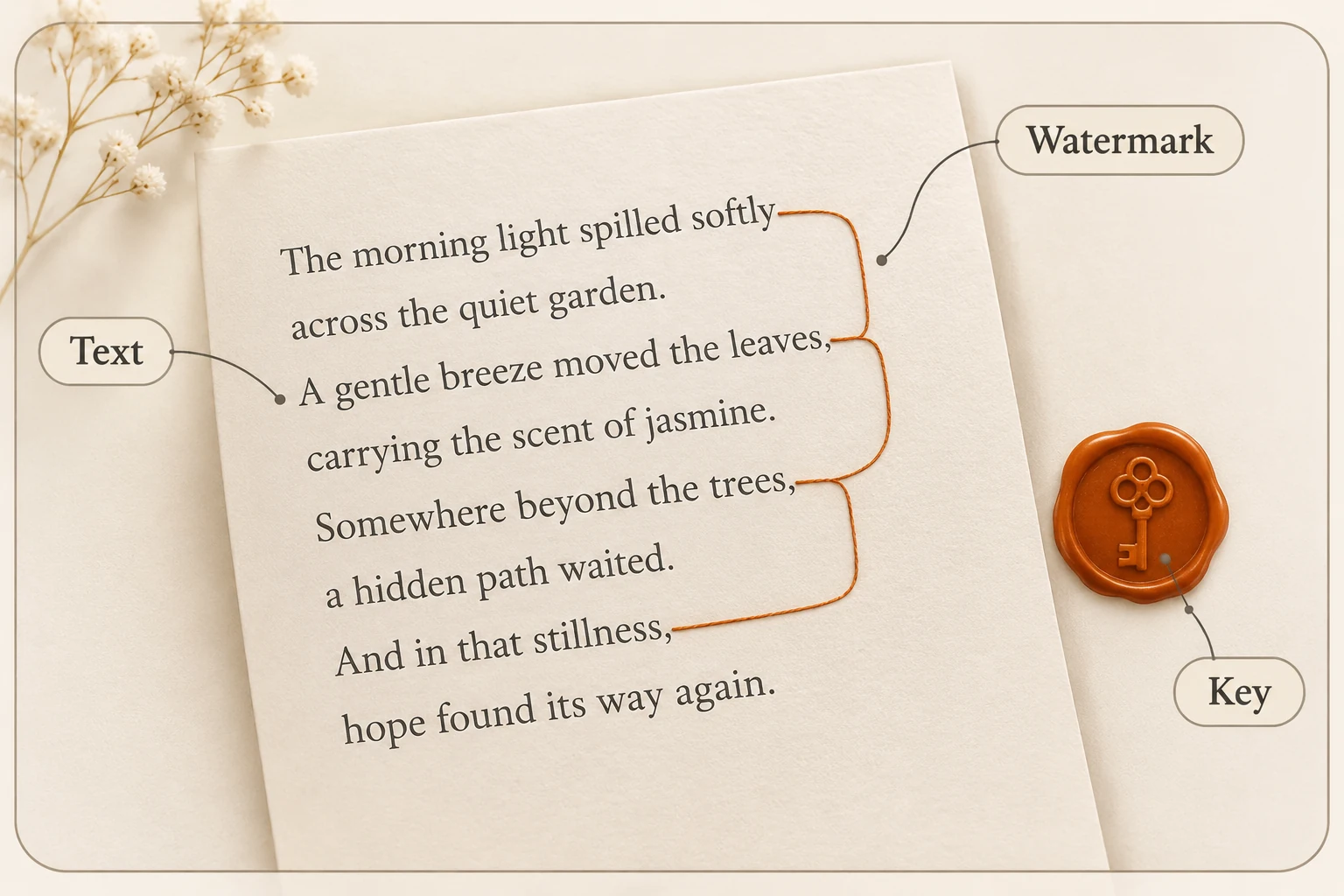
Compare two outgoing request structures offline to find changes to system, tools, and older messages. Keep real signatures, keys, and private content out of public reports. This can identify your own edits; it cannot prove upstream verification. With Nbility, check the Claude compatibility scope for preserved blocks, controls, and response information. No authenticated channel validation was performed here. One related change from the same period affects output rather than history: Claude's text watermark leaves these blocks and the request structure alone, but output may omit the watermark when sampling parameters are set to non-default values.