DeepSeek Flash 1017 Puts Complete Projects at the Center
Read the Flash 1017 coding update, distinguish a stable API alias from a model version, and use a small public app to evaluate complete delivery and tool integration.
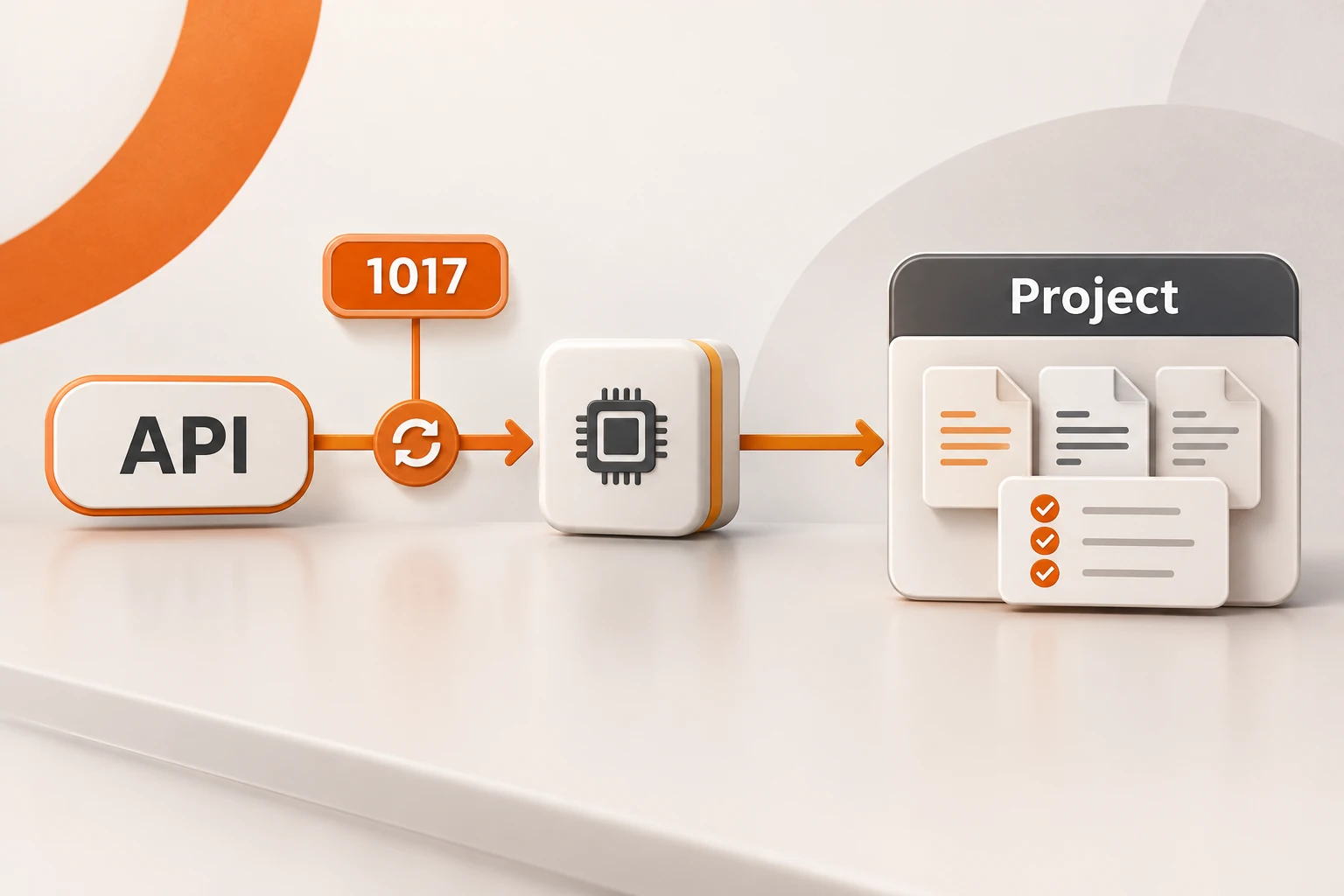
DeepSeek updated V4.1 Flash on October 17, naming the release DeepSeek-V4.1-Flash-1017 while retaining deepseek-flash as its official API name. The developer-facing story centers on sustained project work, tools, and finished software, rather than isolated answers.
This article rereads the announcement, changelog, and official model card on November 11, 2026. The update falls within the past 30 days; it is not a release from today. We have not compared old and new models. Claims about faster tasks, shorter output, and improved performance remain vendor-reported results.
From generating a fragment to building a project
The announcement illustrates end-to-end development with 3D scenes, a browser racing game, and a Godot project. It describes reinforcement learning with self-feedback, while the model card reports coding, reasoning, agent, and visual results.
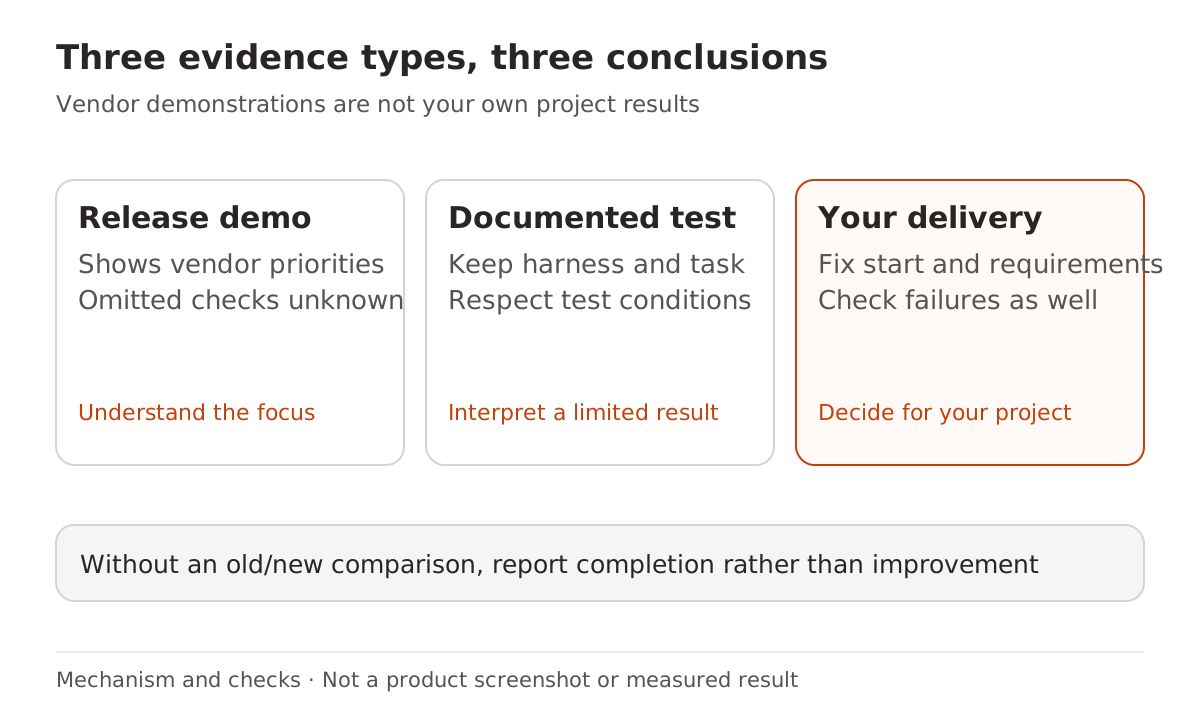
Those sources establish the focus of the release. They do not establish that your repository will reach the same outcome. A game that opens still needs interaction checks, state persistence, asset licensing, failure handling, and maintainable follow-up changes. An omitted check cannot be assumed to have passed.
The published results also use different execution frameworks. Terminal-Bench 4.0 uses Claude Code; DeepSWE v1.1 uses Mini-SWE-V2. The framework influences file access, tool calls, and feedback. Scores across those tasks should not become a blanket claim that every client improves equally.
The guide to investigating quality changes starts with a concrete failure. That makes it possible to ask whether this update addresses your problem.
A stable name can point to updated software
The official timeline distinguishes the September 10 V4.1 Flash release from the October 17 update. The latter rolled out to DeepSeek's website, app, and API without changing this API alias or its pricing for the update.
| Name you see | Meaning here |
|---|---|
| DeepSeek-V4.1-Flash-1017 | Release and weights version |
deepseek-flash | Official API name for the latest Flash model |
| Client display name | Potentially a local label; inspect the request |
Do not derive an undocumented API ID from the release title. A third-party service has its own catalog and routing schedule; the official alias changing does not prove that every gateway changed with it. See model lists, aliases, and capabilities for that distinction.
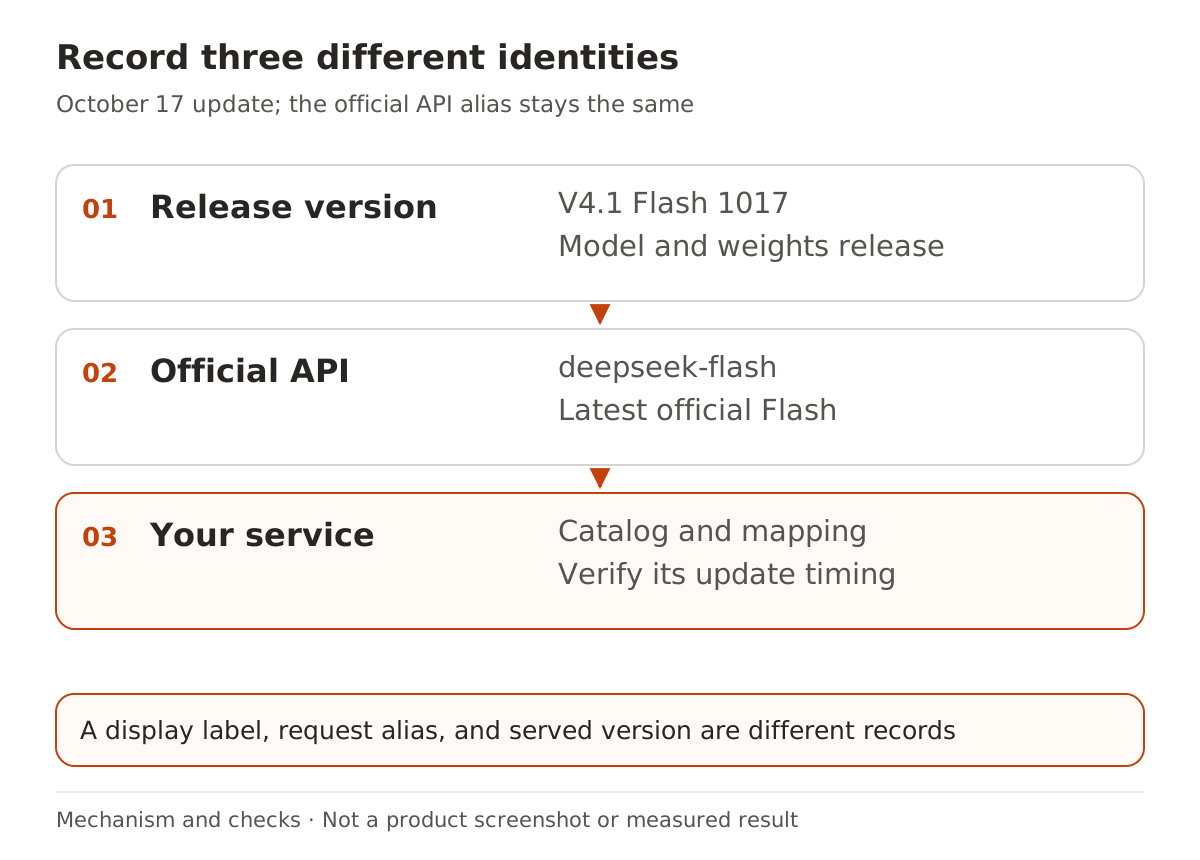
Without an earlier record of the same task or continued access to the old version, a successful run today cannot establish a percentage improvement. It can still show that the current version meets a particular requirement.
Evaluate a complete feature in a small app
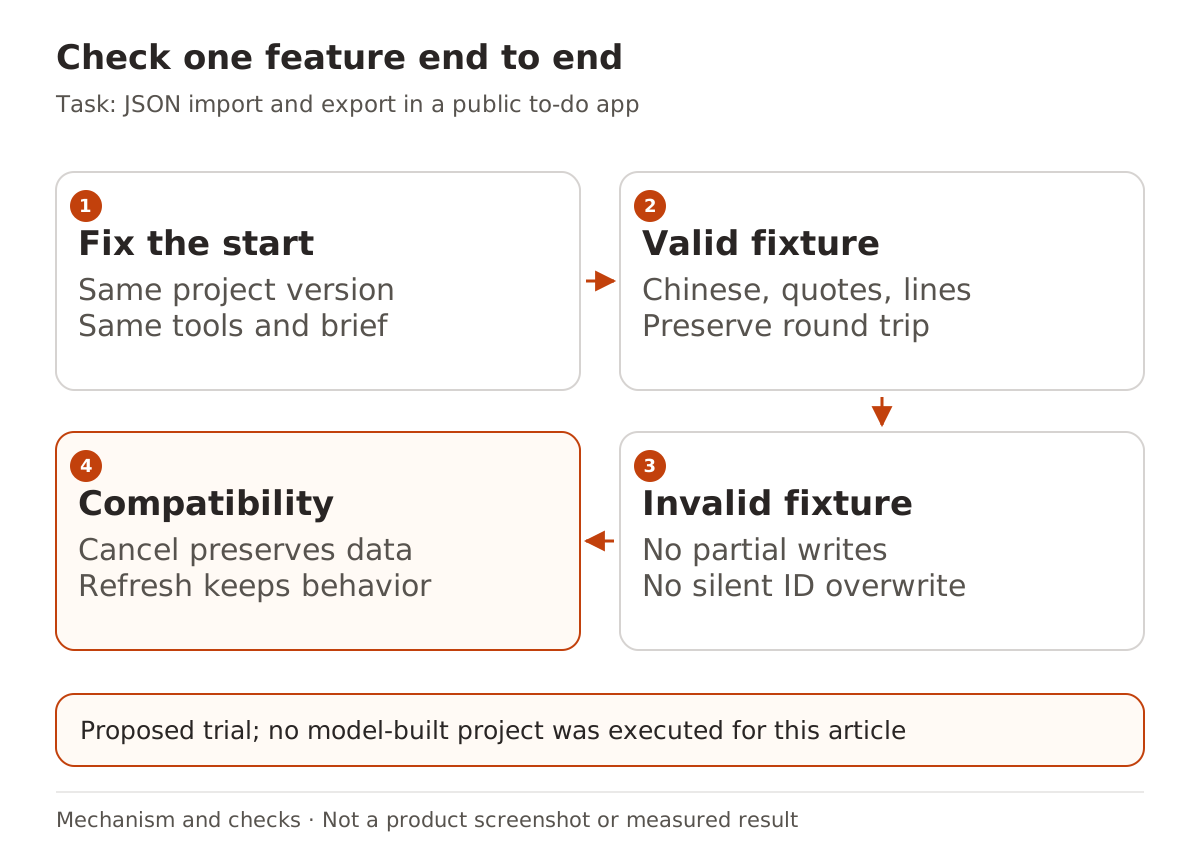
A contained feature in an existing project is often more useful than another unconstrained landing-page demo. This unexecuted trial brief can be used with a public sample repository and synthetic data:
Add JSON import and export to the existing to-do app.

Preserve task IDs, titles, and completion states, including Chinese text,
newlines, and quotation marks, through an export/import round trip.
Validate the entire import before changing the list; locate invalid records.
Do not silently overwrite duplicate IDs; let the user choose how to handle them.
Canceling must preserve data, and refresh must retain the existing storage behavior.
Explain the plan, change necessary files, and report checks actually run and gaps.
This crosses UI, parsing, state updates, and compatibility with existing behavior. Keep a valid fixture and one containing an invalid record. Check that the original list survives failure. A download button alone does not complete the brief.
Record changed files, commands, actual results, and manual corrections. To compare another model, reuse the same starting commit, material, and tool permissions. Changing the client, history, and requirements at once makes the comparison difficult to interpret. The routing guide discusses related constraints.
Model updates still depend on tool integration
The October announcement highlights DeepSeek Harness, CodeBuddy, and WorkBuddy, and recommends Harness 0.2.1-rc.1 or later. That is the announcement's compatibility floor, not a claim that this release candidate is today's latest stable version. Consult current releases before upgrading.
Self-hosting introduces another boundary. The model card says the weights do not ship a Jinja-format chat template. It provides an encoding reference implementation and recommends deepseek-recipe for protocol conversion and prompt encoding. That toolkit leaves inference, tool execution, and HTTP transport to the caller. Downloadable weights do not themselves provide a complete agent service.
The DeepSeek Harness setup guide covers connection settings. Local inference recommendations should not become universal sampling or output settings for every hosted client. Use the fields supported by the actual protocol and tool version.
When trying the model through Nbility, confirm the available ID using the model documentation, then evaluate a public task end to end. The same announcement's separate search capability is covered in the Search & Fetch research workflow; a coding demo does not establish that API's availability. A small, reviewable delivery is a better basis for choosing an everyday model.