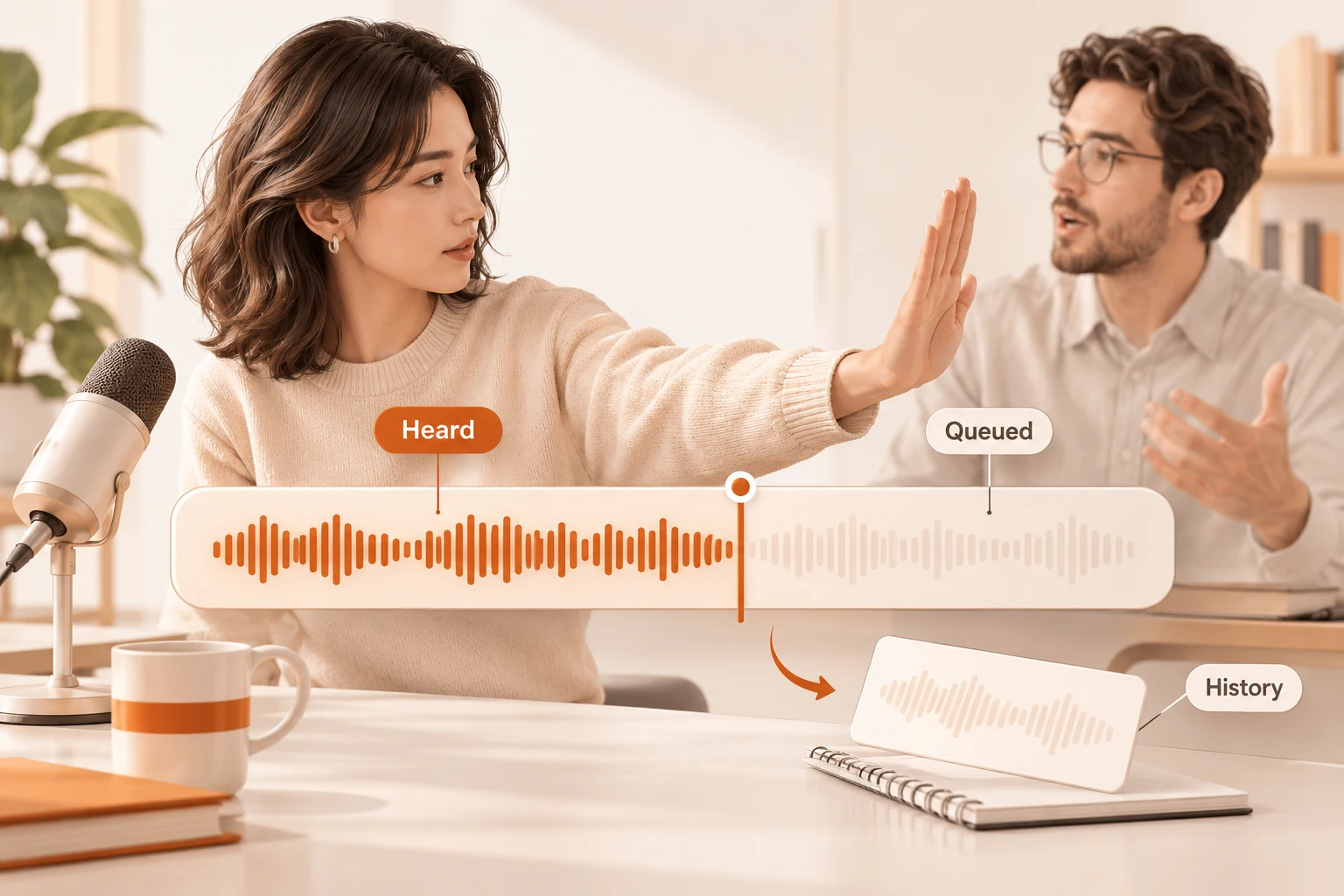
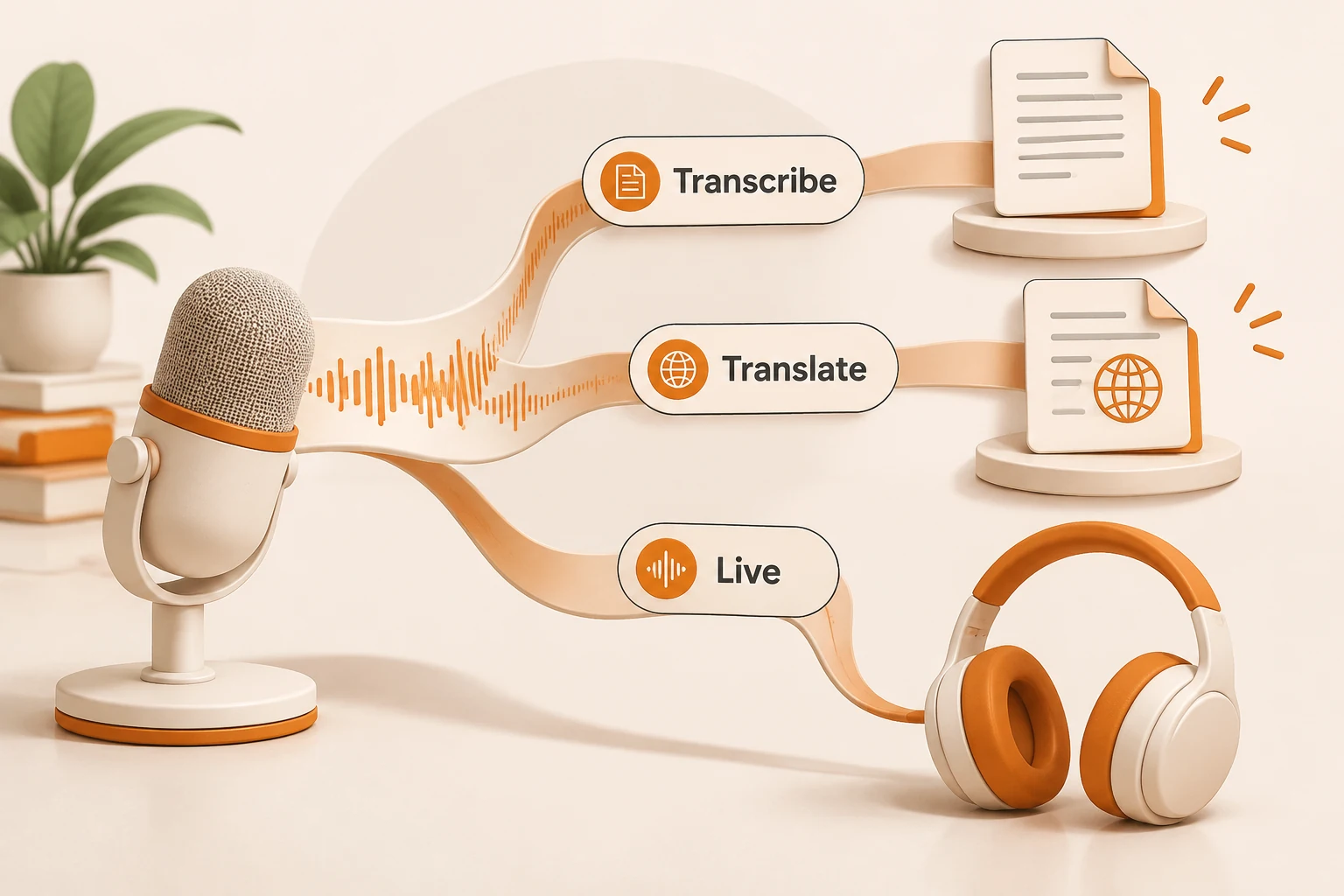
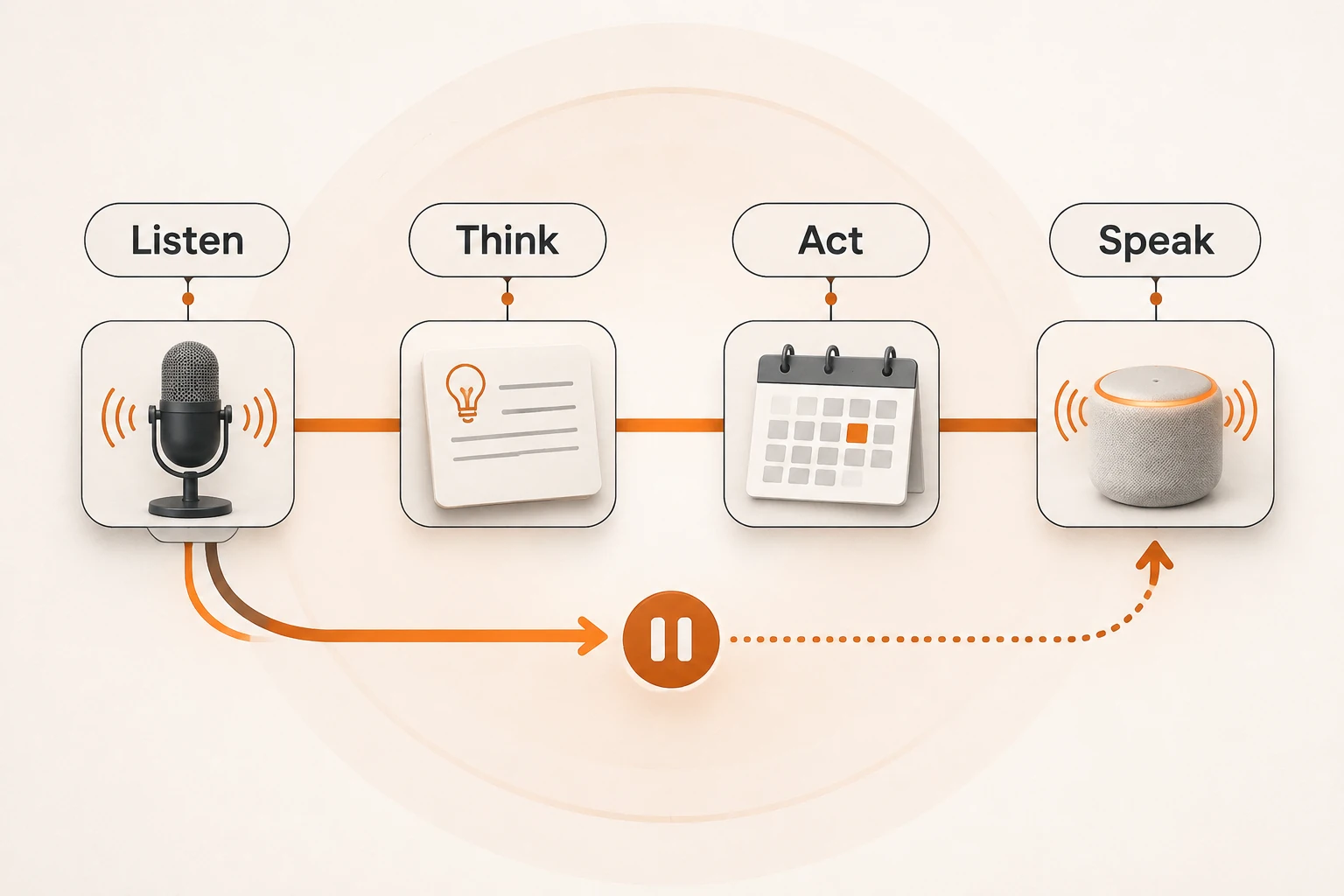
How long should Realtime VAD wait before replying?
Tune silence detection, semantic turn-taking, and response controls separately. Check pauses, clipped starts, and playback timing without treating a VAD timeout as total latency.
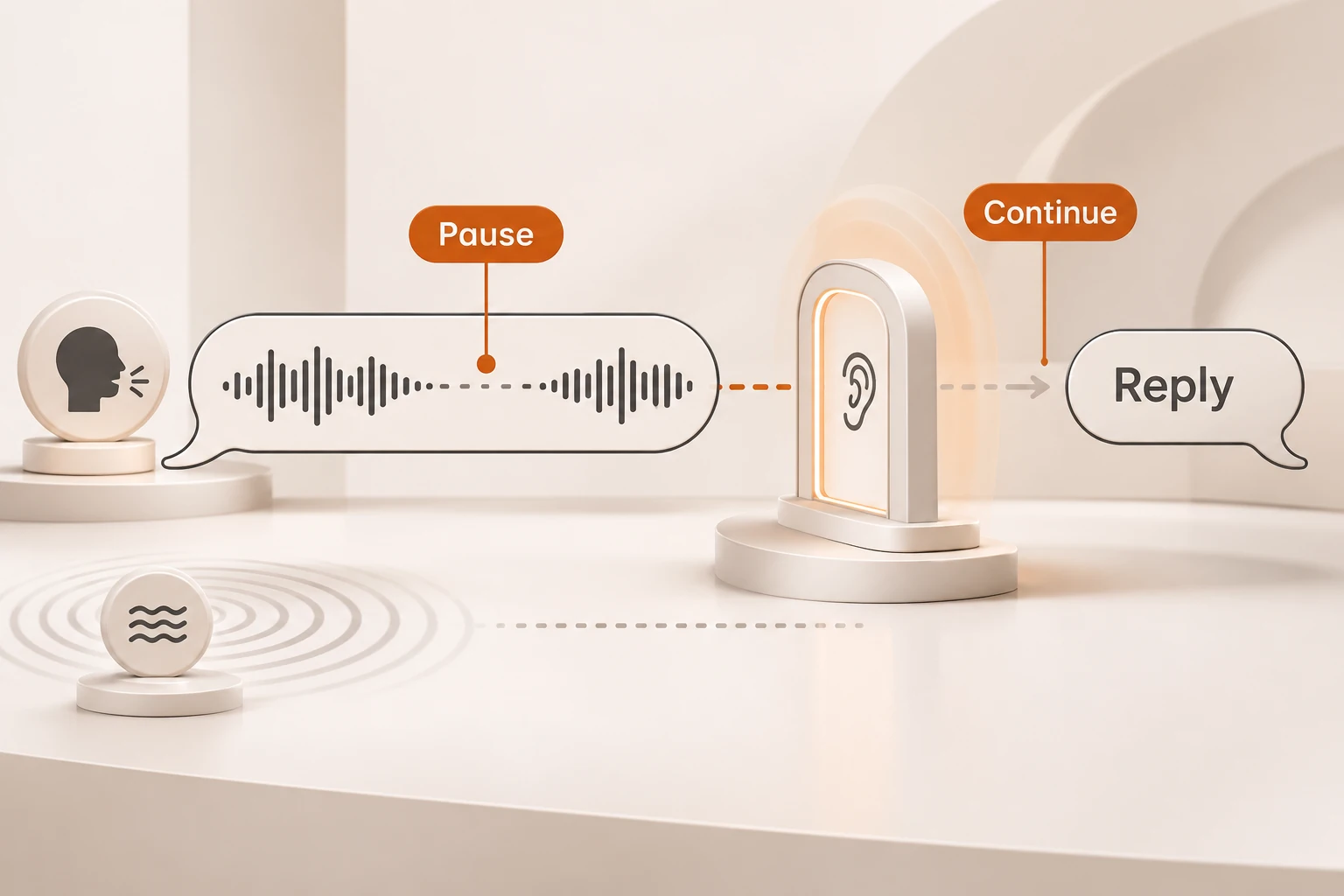
A user says “check next… Thursday,” but the assistant starts acting during the pause. First inspect when the system decides the user has finished. Realtime VAD can use silence or semantic completion; whether to respond also depends on response controls and application logic.
Reviewed November 24, 2026 against OpenAI's VAD guide and conversation guide. This concerns turn detection in established speech conversation sessions, not configuration of the separate Live product. No live connection, latency measurement, or Chinese recognition comparison was performed.
How do server_vad and semantic_vad differ?
server_vad primarily segments on silence; semantic_vad also uses what was said to judge completion. The former exposes sound and silence controls, while the latter uses eagerness to adjust its waiting tendency.
| Setting | Documented role | Observe |
|---|---|---|
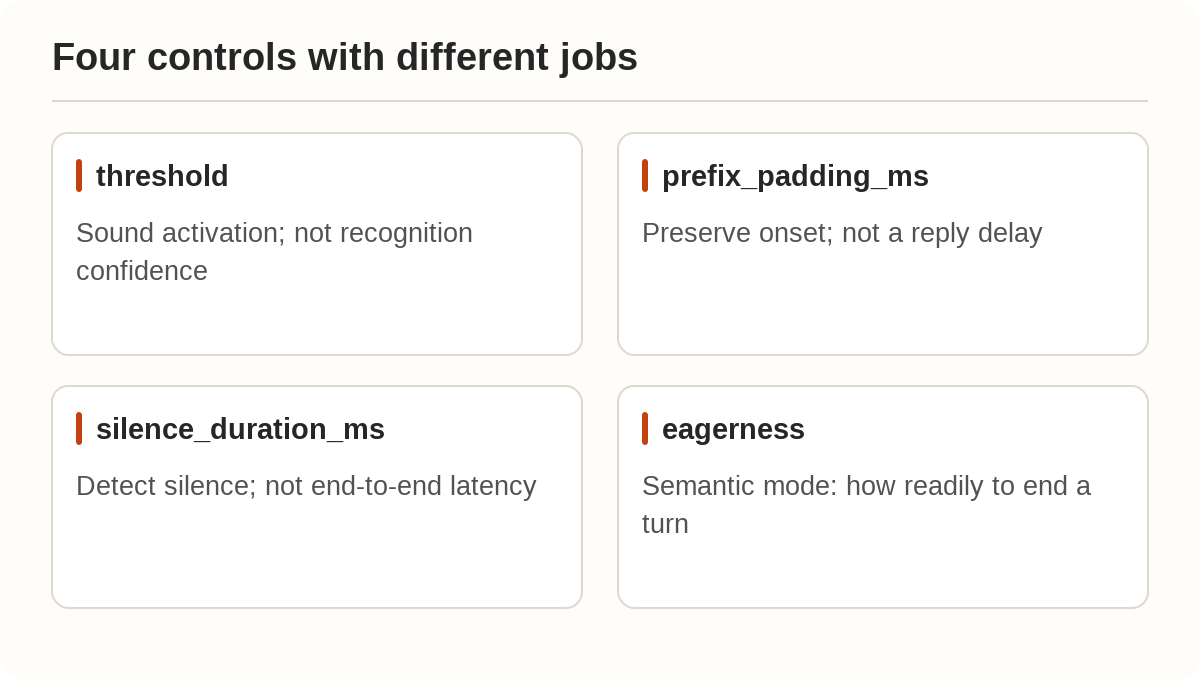
threshold | Activation threshold, 0–1; higher requires louder audio | Noise activation and missed quiet speech |
prefix_padding_ms | Audio retained before detected speech | Clipped beginnings |
silence_duration_ms | Silence needed to detect a stop | Pauses mistaken for completion |
eagerness | Semantic mode's waiting tendency | Hesitation, corrections, complete phrases |
threshold is not a recognition confidence score. prefix_padding_ms is not a delay before answering. Change the setting associated with the observed problem rather than lowering every value at once.
Which configuration is a reasonable starting point?
The official example values are a starting point for a small check, not a universally optimal configuration. This session.update event targets an OpenAI speech conversation session. It is not a complete connection program or a generic transcription configuration:
{
  "type": "session.update",
  "session": {
    "type": "realtime",
    "audio": {
      "input": {
        "turn_detection": {
          "type": "server_vad",
          "threshold": 0.5,
          "prefix_padding_ms": 300,
          "silence_duration_ms": 500,
          "create_response": true,
          "interrupt_response": true
        }
      }
    }
  }
}
500 milliseconds is the silence condition for detecting a stop, not total time until the user hears an answer. Generation, tool calls, decoding, and playback add other waits. Inspect the session update acknowledgment and actual input_audio_buffer.speech_started and input_audio_buffer.speech_stopped events rather than accepting a successful WebSocket handshake.
To try semantic mode, replace the whole turn_detection object so server-VAD-specific properties do not remain:
{
  "type": "semantic_vad",
  "eagerness": "low",
  "create_response": true,
  "interrupt_response": true
}
low allows more speaking time, high segments sooner, and auto is equivalent to medium. These describe behavior, not guaranteed latency for an accent. Check the actual channel protocol using Nbility's Realtime documentation; current official fields do not automatically apply to every compatible channel or older event contract.
Does detecting a stop always create a response?
No. create_response and interrupt_response govern automatic response generation and interruption in speech conversations. To keep VAD but let the application decide when to answer, the conversation guide describes setting both to false, then issuing response.create when appropriate.
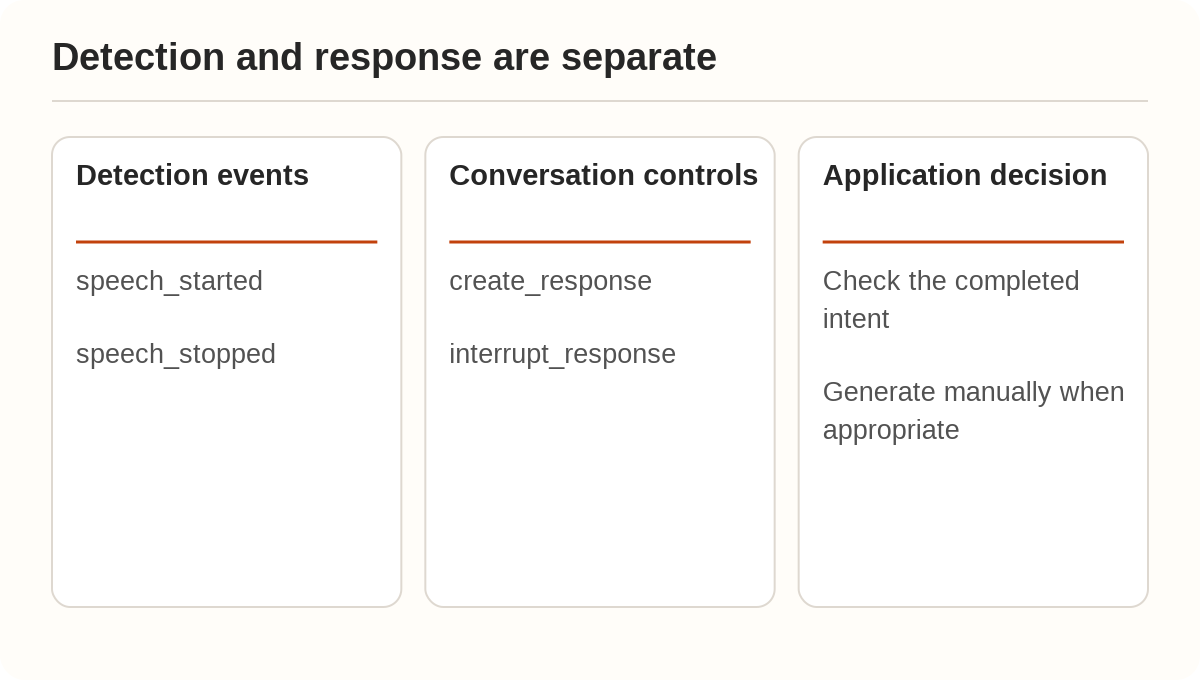
Transcription sessions are different: these controls are conversation-only, while VAD determines transcription chunks. The current guide explicitly requires gpt-live-transcribe and gpt-realtime-whisper to omit turn detection or set it to null, with input_audio_buffer.commit finishing each audio turn. A shared Realtime label does not make this configuration portable to those models.
A complete utterance also does not replace confirmation and permission checks for a write operation. A pause before a date correction must not trigger a booking. See the broader voice-agent tool chain.
How can you tell whether a change helps?
Use the same short recordings and change one setting at a time. Record input completion, detected stop, generation start, and actual playback. The following are acceptance cases, not measured results:
| Recording | Look for |
|---|---|
| A pause inside an order number | Reply before the number is complete |
| “Wednesday… no, Thursday” | Whether the correction survives |
| A complete short phrase in quiet | Unnecessary waiting |
| Quiet speech over background sound | Missed beginnings or false activation |
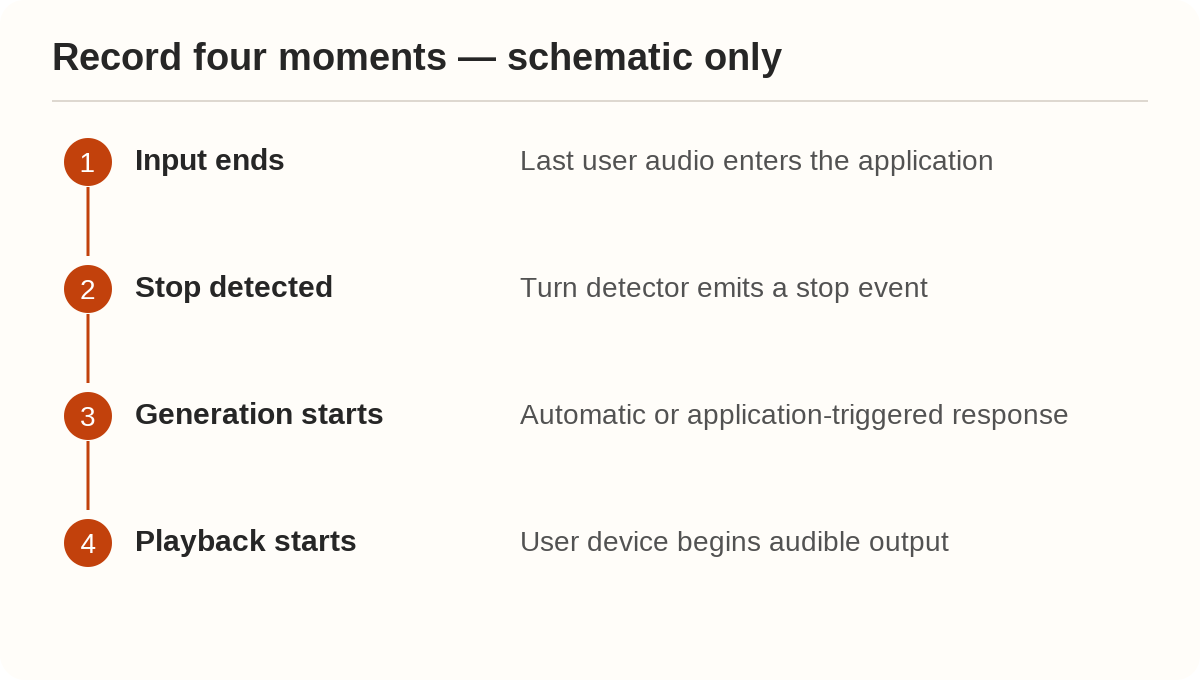
Separate late detection from late playback before changing VAD. For correct input but silent output, inspect the audio playback chain. For old speech continuing after the user interrupts, check interruption and conversation truncation, which addresses output-side state.