n8n Queue Mode Won't Fix Model API Rate Limits
Distinguish n8n worker concurrency from model requests per minute. Use queue timings and API responses to decide whether to add workers or throttle calls.
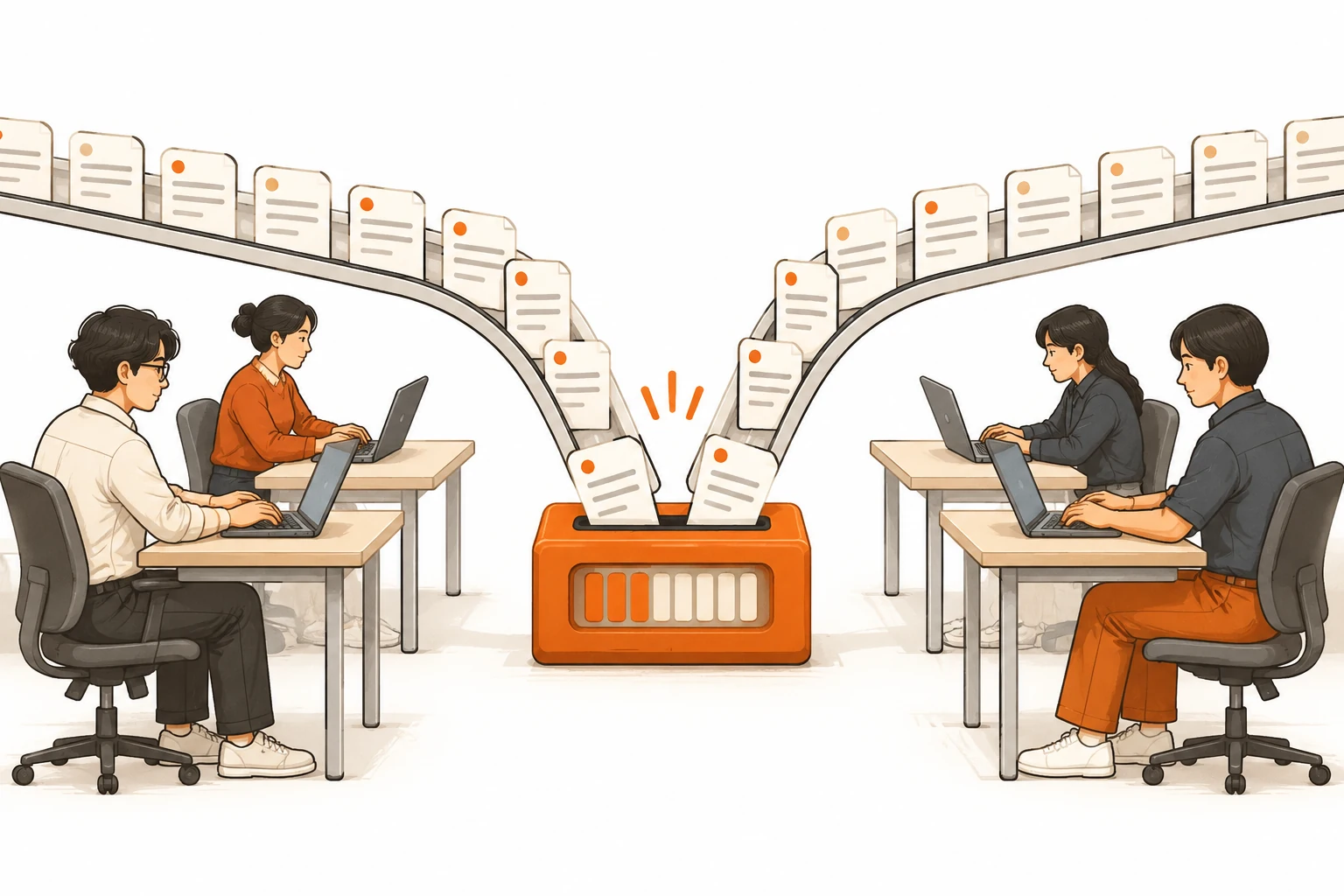
n8n Queue Mode distributes workflow executions to workers. It doesn't pace model calls to match a provider's requests-per-minute quota. A report waiting to start and a model node receiving 429 are blocked in different places. Adding workers to the second case can send more calls into the same limit.
This guide is for self-hosted n8n. The concurrency guide, Queue Mode guide, and 2.48.7 worker source were checked on November 23, 2026. We did not load-test a cluster.
Know which kind of concurrency you're setting
In regular mode you can cap concurrent production executions without distributing work across worker processes. Queue Mode uses Redis to hand jobs to workers, which read execution data from the shared database by ID. Distributed Queue Mode doesn't support SQLite. Moving to it won't change provider limits.
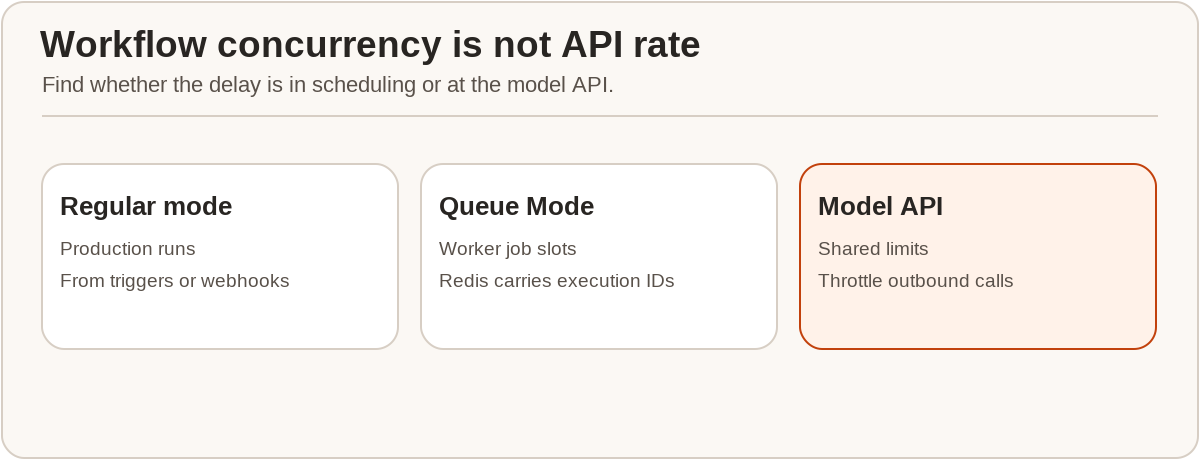
In regular mode, N8N_CONCURRENCY_PRODUCTION_LIMIT applies to production runs started by triggers and webhooks, not manual, child, or error executions. A Queue Mode worker in 2.48.7 uses that environment value when it is not -1; otherwise it uses n8n worker --concurrency or the flag's default of 10. This is the number of concurrent jobs per worker, not a cluster-wide allowance. Read the effective value in each worker's startup log before assuming a flag took effect.
Count calls rather than jobs
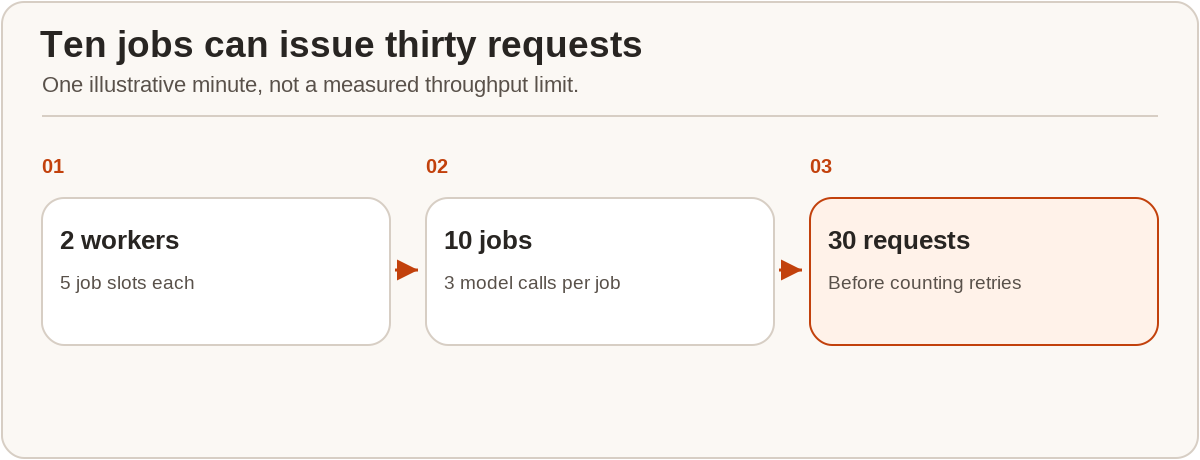
Worker slots don't translate directly to requests per minute. Suppose two workers have five slots each, and ten reports each make three model requests in the same minute. That is 30 requests before any retries. If jobs finish and others start during that minute, calls can rise further. These are example counts, not a throughput estimate.
Throttle at a shared point that sees the actual outbound requests, with the same scope and window as the limit you're enforcing. Don't assume two keys get independent quota. Also distinguish request rate, token rate, and insufficient balance; see Nbility's error guide. For temporary limits, honor Retry-After when provided and bound backoff and retries. Retry storms explains why retries at several layers add up.
Record three timestamps before adding workers
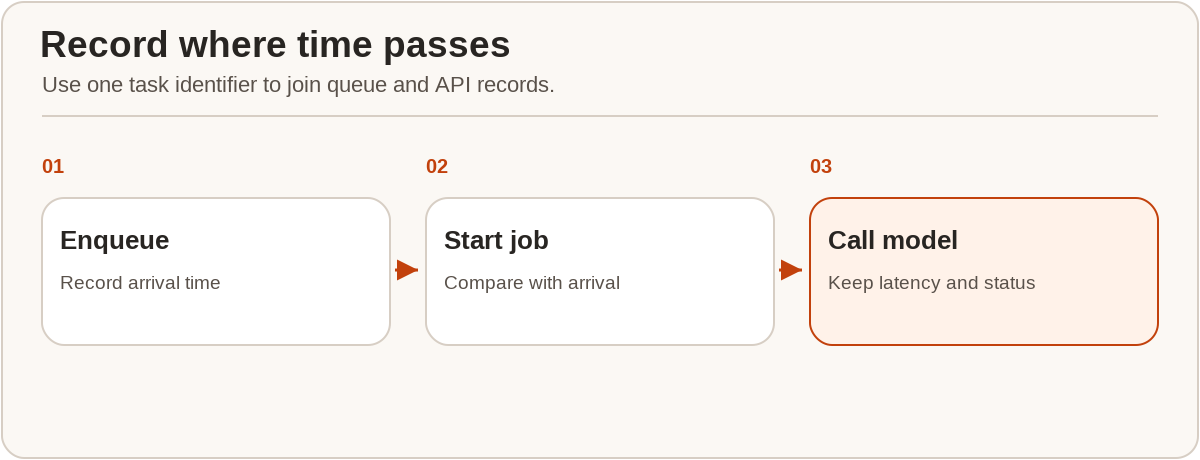
Use one task identifier to tie together enqueue time, execution start, and model request time and status. Start with a mock endpoint that deliberately returns 429, then use a small batch of read-only work for a live check. Keep raw prompts and API keys out of the records.
| Observation | Where to look first |
|---|---|
| Queue delay grows, API responses look normal | Worker capacity and database pressure |
| Jobs start quickly, model calls get rate-limited | Pace the calls; don't add workers first |
| Runs are slow, model responses look normal | Separate model latency from approval waits and downstream I/O |
Use the n8n model connection walkthrough to configure the call and alert and delivery checks to verify the outcome. The queue absorbs a backlog; it doesn't tell you whether a report arrived or whether it is safe to send it again.