Prepare Gemini Applications for the December Model Changes
Track Gemini 2.5 and Omni routing dates, distinguish them from the completed Embedding 2 transition, and verify request and tool contracts before switching.
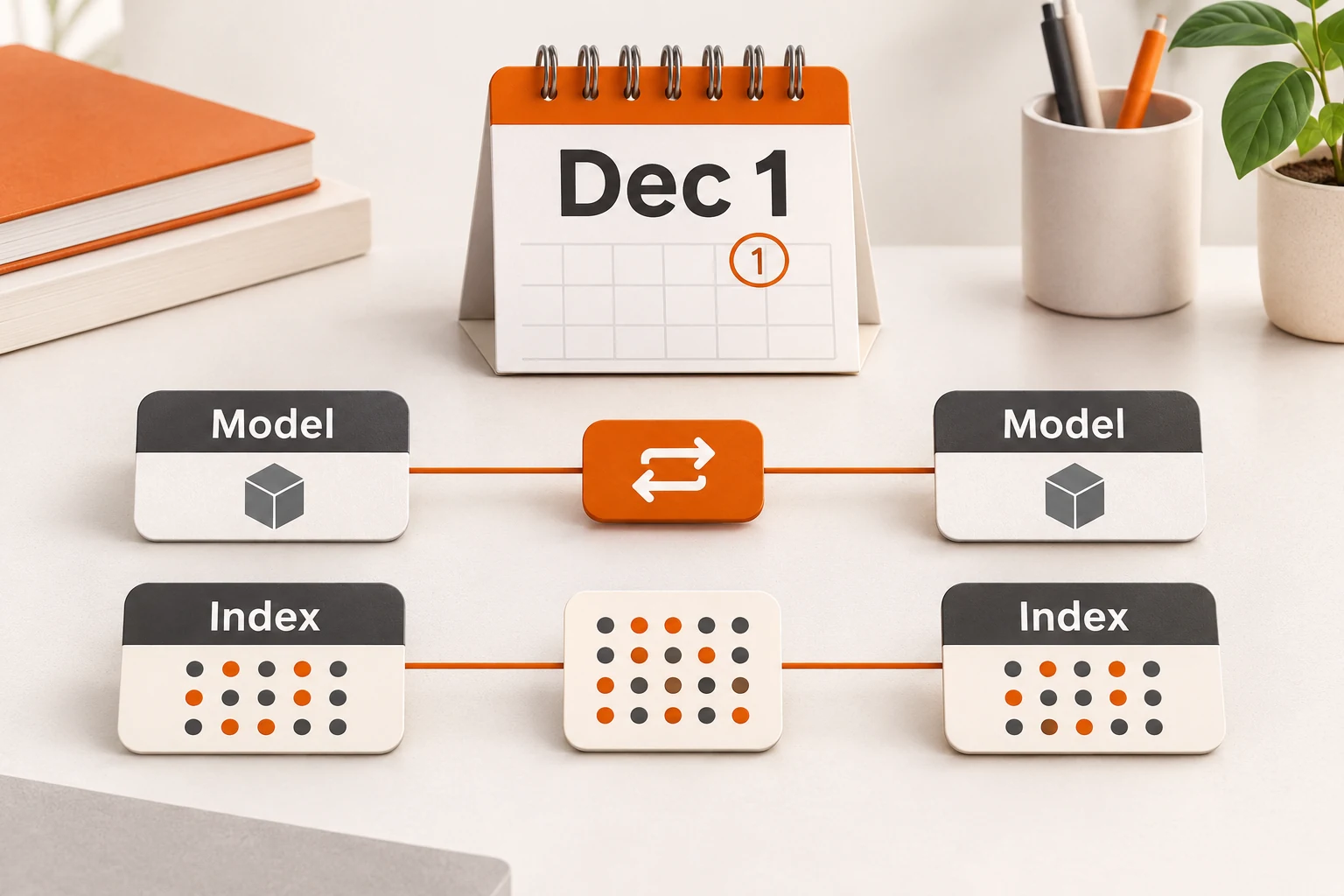
Applications still using Gemini 2.5 Pro, 2.5 Flash, or Omni 1.1 Flash have migration work to schedule in November. Google has announced automatic routing to successor models in December. A model string that remains accepted does not guarantee unchanged parameters, tool behavior, or task results.
Embedding 2 Preview has already transitioned, with an explicit same-embedding-space guarantee. That is a different compatibility case from replacing a generative model.
Dates and scope were checked against the release notes and deprecation documentation on November 11, 2026. These announcements describe Google's Gemini API. We did not run authenticated migration requests or establish that a third-party gateway follows the same mappings and dates.
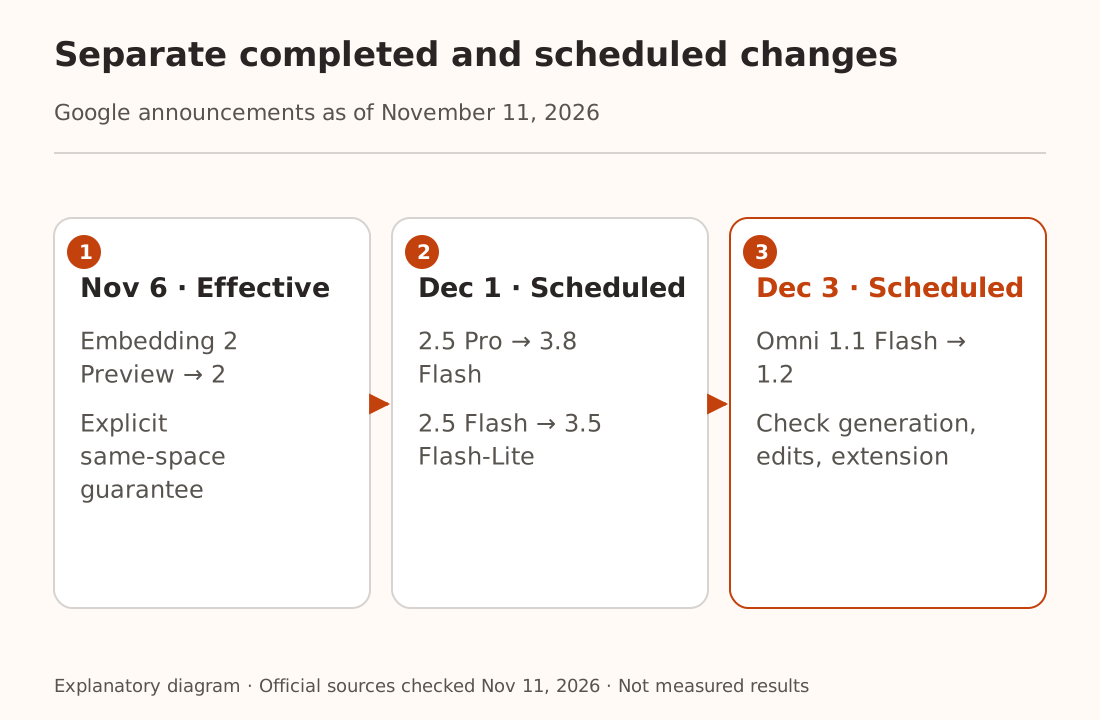
Separate completed transitions from scheduled changes
| Existing name | Announced destination | Effective date | Status when checked |
|---|---|---|---|
gemini-embedding-2-preview | gemini-embedding-2 | November 6, 2026 | Effective; update the model string |
gemini-2.5-pro | gemini-3.8-flash | December 1, 2026 | Scheduled; verify in advance |
gemini-2.5-flash | gemini-3.5-flash-lite | December 1, 2026 | Scheduled; verify in advance |
gemini-omni-1.1-flash | gemini-omni-1.2-flash | December 3, 2026 | Scheduled; verify in advance |
The deprecation page limits current 2.5 Pro and Flash API access to existing users with prior active usage. They are no longer selectable in Google AI Studio. A future routing date is not a promise of new-account access to the older models. These entries also do not describe every preview, dated release, or third-party alias.
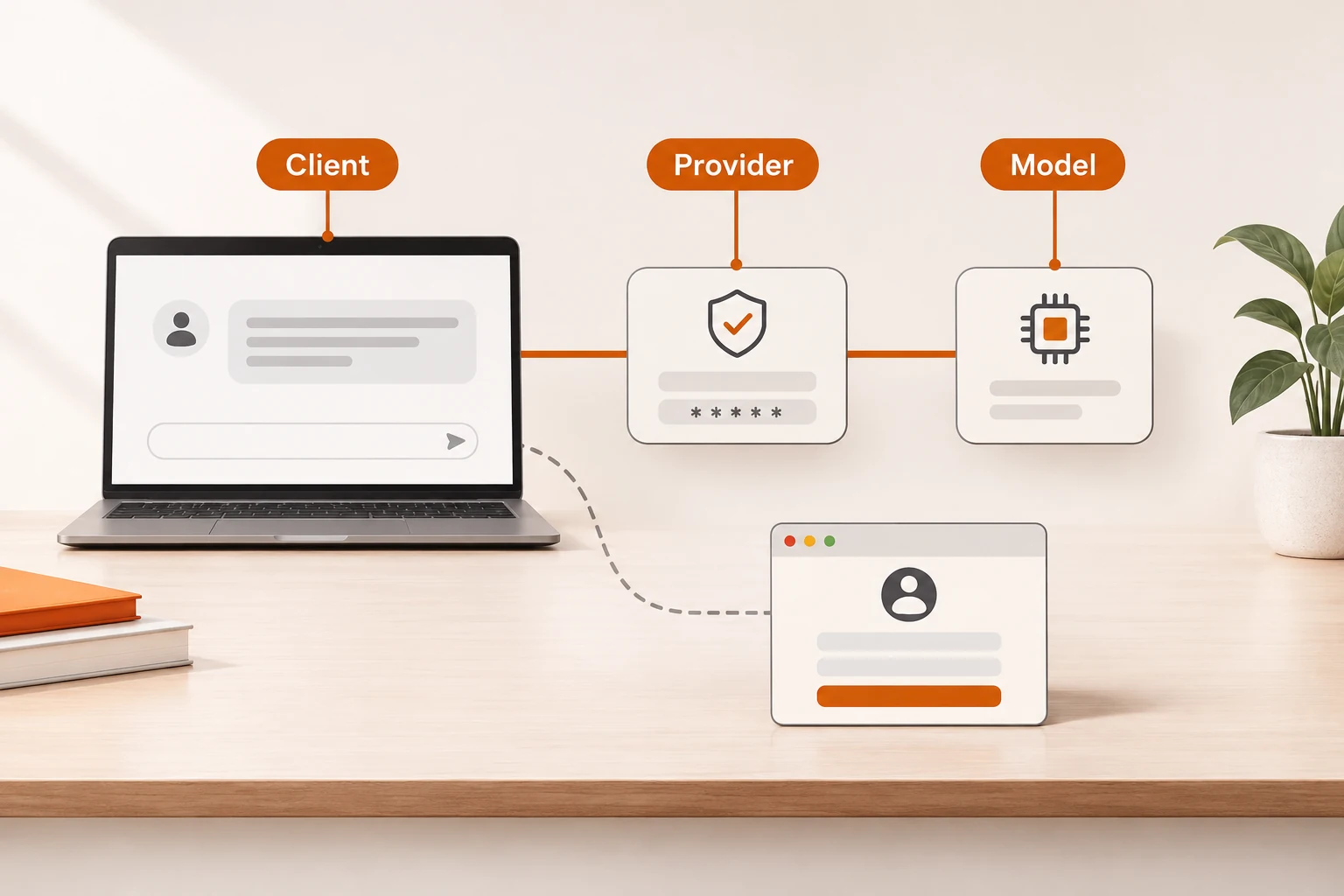
A client display label, an outgoing model string, and a service-side mapping can be separate settings. Use the ID and alias explanation to locate the one your application actually relies on.
Review request behavior when replacing 2.5
The announced Pro destination is Flash, and the Flash destination is Flash-Lite. Do not infer successors from a naming hierarchy.
The 3.8 Flash migration guide and 3.5 Flash-Lite migration section identify several checks:
- Thinking configuration: replace
thinking_budgetwith a supportedthinking_levelenum. A numeric budget is not a valid replacement value. 3.8 Flash does not supportminimal; Flash-Lite has different defaults and task recommendations. - Older parameters and prefilled turns: remove deprecated
temperature,top_p, andtop_k, unsupportedcandidate_count, and prefilled model turns as directed. The 3.6 guide says some sampling fields are currently ignored and may produce errors in future generations. It does not say every such request fails today. - Tool continuity: verify the SDK, function-call structure, and preservation of
thought_signature. A first text answer cannot validate the turn after a tool result.
These are native Gemini migration requirements. A compatibility layer may translate fields, so inspect the actual outgoing request before adding native settings to another protocol. The API format overview provides background.
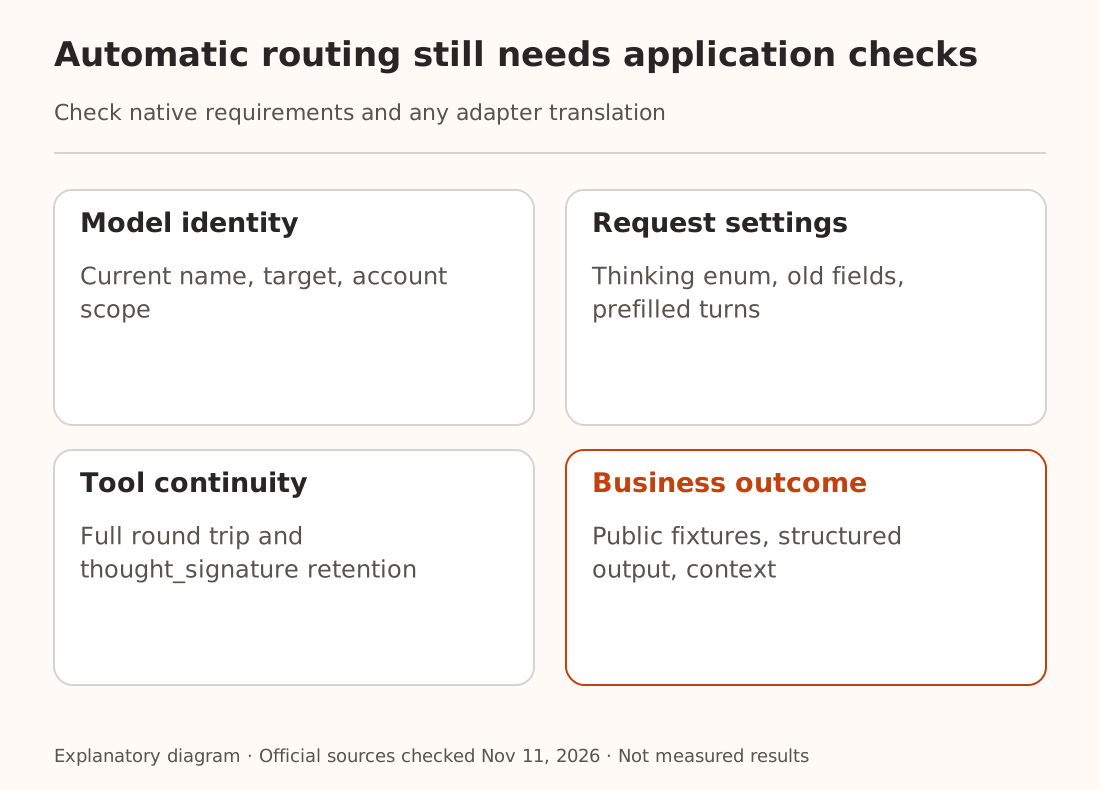
Acceptance checks should include text, a complete harmless tool round trip, required structured output, and a follow-up that depends on prior context. Add public image or file fixtures if the application needs them. Record individual expected outcomes rather than a single connection-success label.
Why this embedding transition does not require rebuilding vectors
The November 6 entry explicitly says the stable gemini-embedding-2 uses the same API schema, pricing, and embedding space as its preview. For this transition, no additional code changes or vector re-indexing are needed beyond the recommended model-string update.
That conclusion rests on a provider compatibility statement about two specific versions. Similar names or equal dimensions cannot establish it. Another embedding model may return vectors of the same length in a different semantic space.
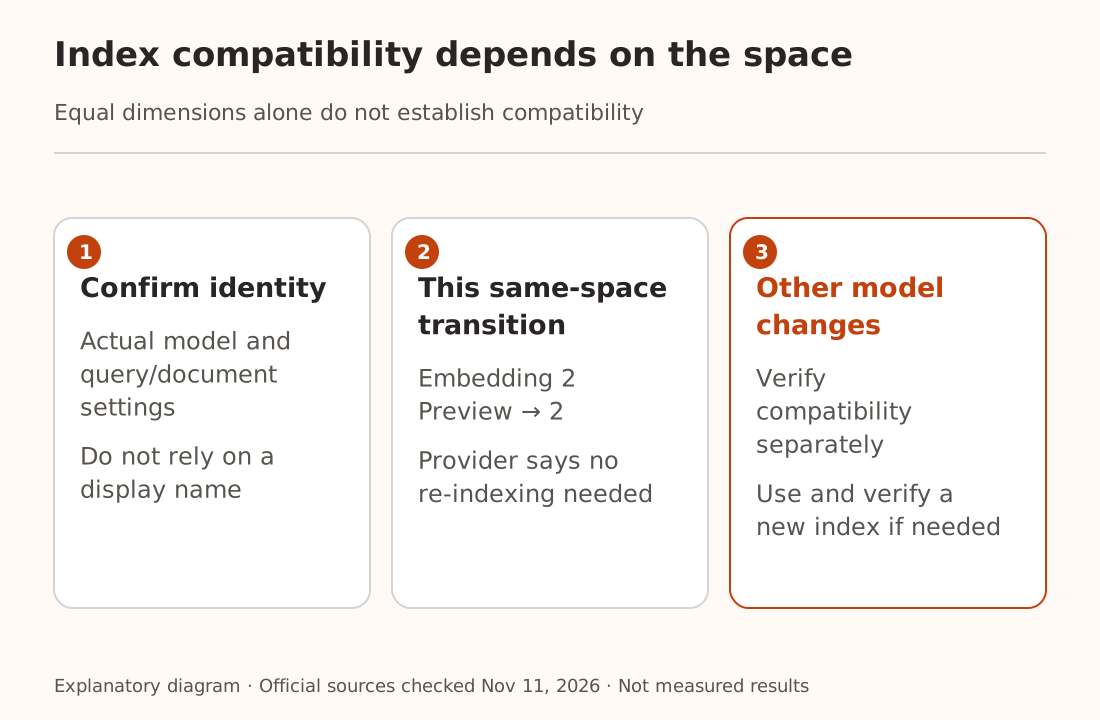
Keep model identity, dimensions, query/document settings, and known retrieval results for a small public fixture. Recheck them after updating the string. If your actual endpoint maps to another model or changes configuration, the official guarantee no longer establishes compatibility for that path.
For dimension errors or unexpected old-document retrieval, follow the Dify model, cache, and index investigation. The Embeddings API covers general request fields. This particular exception should not remove validation for other model changes.
Make a controlled switch during November
Start by locating references. This command prints matching filenames only, makes no network requests, and changes no files:
rg -l --hidden \
  -g '!node_modules/**' -g '!.git/**' -g '!*.lock' -g '!.env*' \
  'gemini-2[.]5-(pro|flash)|gemini-omni-1[.]1-flash|gemini-embedding-2-preview|thinking_budget' .
Also inspect deployment configuration, background summaries, workflow nodes, fallback models, and service mappings. Code search may miss them. Check secret-manager configuration privately without copying credentials into the migration record.
Use the target model explicitly in a test environment, verify the required operations, and move traffic gradually. Keep a working alternative configuration; an old name scheduled for automatic routing is not a durable rollback target. Omni users should test generation, editing, and extension separately using the conversational-video explanation.
For Nbility, confirm the actual catalog and mapping using the model ID guide. A Google announcement is not a gateway release commitment. A completed checklist makes the December change something you can verify before it happens.